Campari
ingredient / ingredient-campari
カンパリ
Campari is a vivid-red Italian bitter liqueur brand described as having been devised by Gaspare Campari in 1860. It is produced by Campari Group (formerly Davide Campari-Milano) and is one brand within amaro, the general bitter/liqueur category under EU law.
Photographs (captions in Japanese)
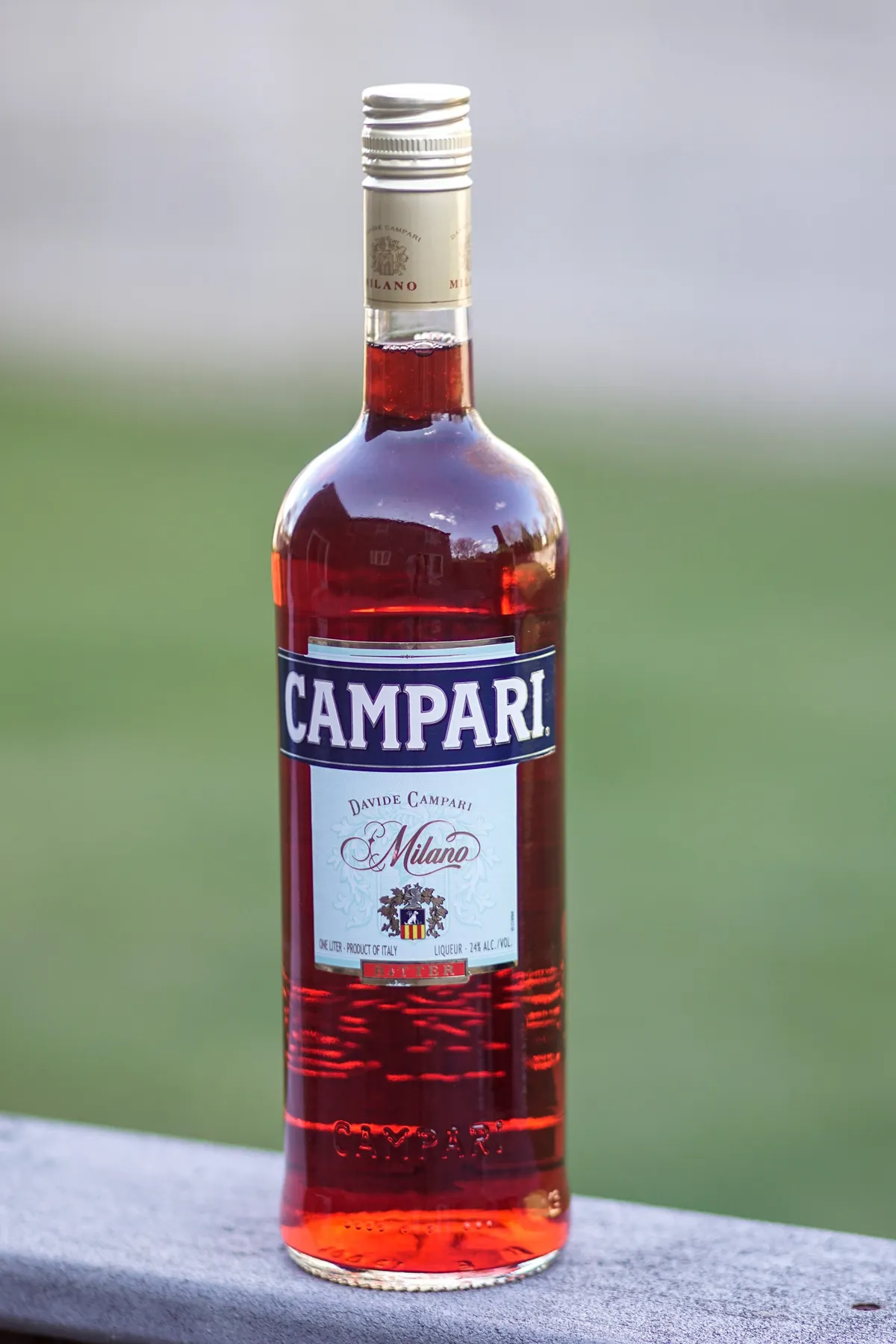
満たされたCampariのボトル。屋外の手すりに置かれ、ラベルが正面から読める
写っているもの: N/A(銘柄ボトル)部位・状態: 未開封のボトル全体。液体が満たされ、ラベル全面が読める
写真: Kenneth C. Zirkel/ CC BY-SA 4.0/ 原画像/ 台帳の原画像
写真の範囲と来歴
被写体の確認: 原典の記載による同定。own work、米国で購入したボトルとの記載。原寸2000x3000 画像を開いて確認。ラベルに「CAMPARI」「DAVIDE CAMPARI Milano」「BITTER」の文字が明瞭に読める
掲載画像: Wikimedia Commons の原本を長辺2400pxへ縮小。切り抜き・色調変更なし。 表示用には幅1200px上限のWebPを配信し、台帳の原画像は上のリンクから確認できます。
On this page (7 sections)
Reading the bitterness
Campari is a vividly red Italian bitter liqueur described as having been created in 1860 by Gaspare Campari. Its official website claims 「それ以来変えられていない」 (in translation: "it has not been altered since"). The company calls it "An unmistakable, vibrantly red Italian bitter" and describes its taste as 「多層的で苦い味わい」 (in translation: "multi-layered, bitter taste"); its tasting notes say 「心地よい苦さとビロードのような後味。オレンジ・ハーブ・木の香りが強い」 (in translation: "Pleasantly bitter with a velvety aftertaste. Intense notes of orange, herbs and wood.").
The official site quotes the company's herbalist and master blender Bruno Malavasi as saying 「このレシピは実に美しく均衡が取れており、リストの最後の一原料を取り除くだけで、液体全体が崩れてしまうだろう」 (in translation: "The recipe is so beautifully balanced that removing even the last ingredient on the list would make the entire liquid fall apart"). The same person is named as the keeper of Aperol's secret recipe in its official FAQ, linking his role across the two brands.
Representative cocktails made with Campari include the Negroni and Americano. The IBA's official Negroni recipe calls for 30 ml gin, 30 ml Bitter Campari, and 30 ml sweet red vermouth, poured directly into an ice-filled glass, stirred gently, and garnished with half an orange slice. Its Americano recipe similarly combines 30 ml Bitter Campari, 30 ml sweet red vermouth, and a splash of soda water, then adds half an orange slice and lemon peel as garnish.
Campari's official history page is internally inconsistent about the Americano's date of origin. Its timeline entry for 1920 describes that period as 「アメリカーノとネグローニが誕生した時代の始まり」 (in translation: "the beginning of the era when the Americano and Negroni were invented"), while a section introducing a 2015 calendar says 「1919年に誕生したネグローニから、1933年のアメリカーノへ」 (in translation: "from the Negroni born in 1919 to the Americano in 1933"), expressly assigning 1933 to the Americano. The dates do not agree within the same page. The IBA's official page also notes a Spritz variant made with Campari in place of Aperol.
Sources for this overview
Checked for this overview: Used the company's own account of its creation in 1860. / Recorded both conflicting dates on the official site.
Campari Bitter: the Italian Red Spirit since 1860
Checked for this overview: Used the official tasting notes verbatim. / Used the quotation attributed to Malavasi and the link across both brands.
Negroni – IBA Official Cocktail
Checked for this overview: Used the official IBA Negroni proportions.
Americano – IBA Official Cocktail
Checked for this overview: Used the official IBA Americano proportions.
Spritz – IBA Official Cocktail
Checked for this overview: Used the official note about substitution in the Spritz.
Follow the connections
Americano (cocktail) →— origin narrative as told→ Campari
Negroni →is prepared through→ Campari
Campari →is used as an alternative to→ Aperol
Structured claims — open a section to read each claim's confidence, evidence and limits
How processing and cooking change it (3)
Scope: The IBA's official recipe
Note: Gin is not made into an entity, since it does not directly relate to this database's bitterness theme. Vermouth is connected to the existing entity ingredient-vermouth (the subtype 『Sweet Red Vermouth』 is kept within object_text; no new entity is created for it).
Show data
dish-negroni —is_prepared_with→ ingredient-campariScope: Official IBA recipe.
Note: Vermouth is linked to the existing ingredient-vermouth entry (the subtype name remains in the object text). Soda water has not been made an entity because it is not directly related to the bitterness theme.
Show data
dish-americano-cocktail —is_prepared_with→ ingredient-campariScope: A note on the IBA's official recipe (Spritz page)
Show data
ingredient-campari —is_alternative_to→ ingredient-aperolCulture (4)
Scope: Italy, Milan. Campari's official site, 『Our History』 (the company's own account)
Note: Confirmed: 『in 1860 Gaspare Campari invented a liquid so distinctive and revolutionary that it has not been altered since.』 Only the founder's name and the year are given; this page contains no description of ingredients or composition.
Show data
ingredient-campari —has_history→ "The source states that Gaspare Campari devised this beverage in 1860. The company's official site itself declares 『それ以来変えられていない』 (in translation: "it has not been altered since")."Scope: The Campari official website's product page (the company's own description).
Note: One of the few self-descriptions in which the company's official website explicitly uses the word "bitter."
Show data
ingredient-campari —is_presented_as→ "It is "An unmistakable, vibrantly red Italian bitter," characterized by a "vibrant red color and multi-layered, bitter taste." The tasting notes state: "FLAVOR: Pleasantly bitter with a velvety aftertaste. Intense notes of orange, herbs and wood.""Scope: Campari's official product page (quotation attributed to its herbalist and master blender).
Note: Bruno Malavasi is also named in Aperol's official FAQ as the keeper of 『Aperol’s recipe』; his role across both brands is recorded.
Show data
ingredient-campari —is_presented_as→ "The company quotes its herbalist and master blender Bruno Malavasi as saying 『THE RECIPE IS SO BEAUTIFULLY BALANCED THAT UPON REMOVING EVEN THE LAST INGREDIENT OF THE LIST, THE WHOLE LIQUID WOULD FALL APART』."Scope: Campari's official 『Our History』 page (the company's own account).
Note: This is a mismatch between dates on the same company's same page. In light of the lesson from the erroneous Unicum attribution and invented numbers discovered previously, neither is turned into a definitive claim; both formulations are recorded as written.
Show data
dish-americano-cocktail —has_historical_origin_narrative→ ingredient-campari