ashitaba
ingredient / ingredient-ashitaba
明日葉 / Angelica keiskei
Ashitaba. An official regional record describes its use in the Izu Islands in dishes such as ohitashi (blanched greens) and tempura.
Photographs (captions in Japanese)
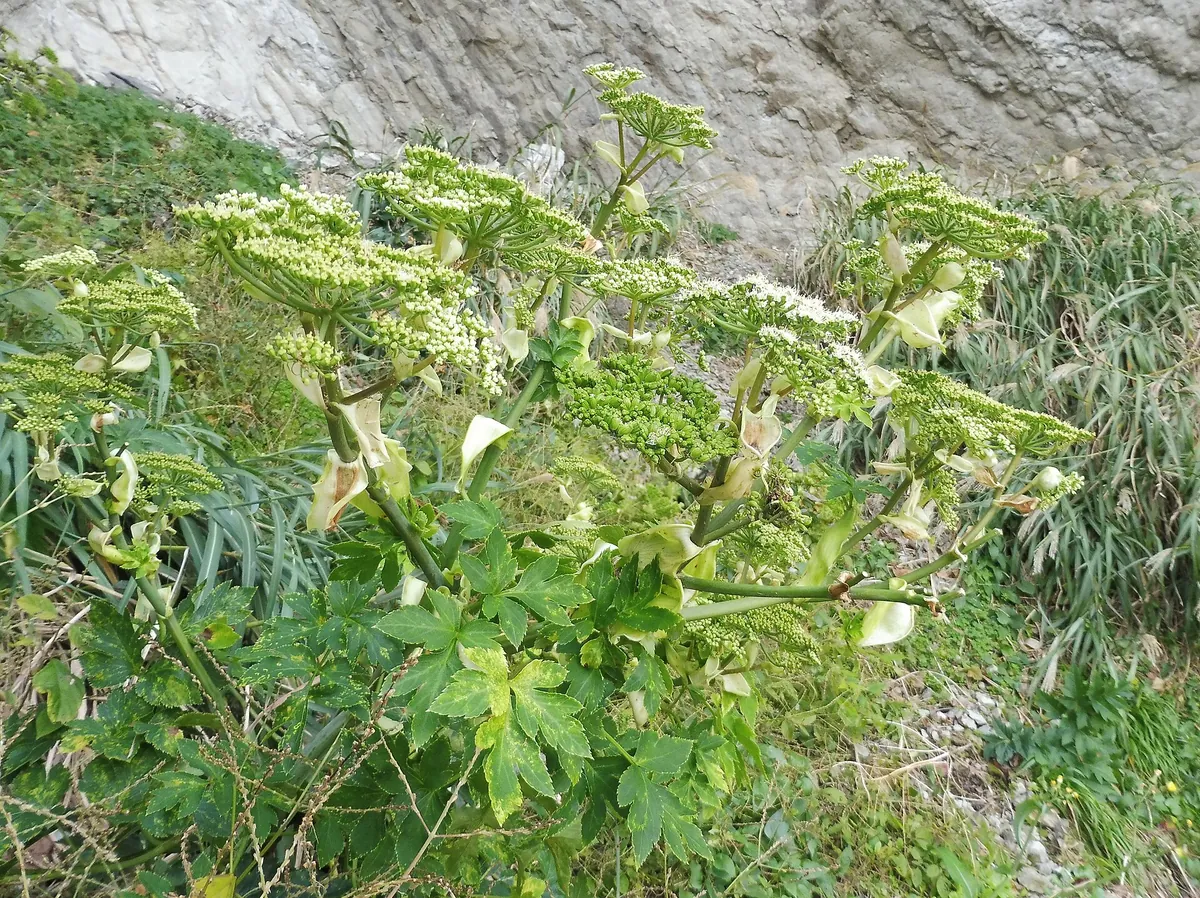
明日葉(Angelica keiskei)。宮川湾東方の海岸の岩場に自生する開花期の株。食用にするのは主に若い葉・茎であり、本写真は開花した成株の姿を示す。
写っているもの: Angelica keiskei部位・状態: 開花期の明日葉の株全体。複数の茎が伸び、先端に白い散形花序をつけ、下部に羽状複葉の葉が茂っている状態。海岸の岩場に自生
写真: Mason Brock (Masebrock)/ Public domain/ 原画像/ 台帳の原画像
写真の範囲と来歴
被写体の確認: 原典の記載による同定。原典キャプションは撮影地点(宮川湾東方の海岸岩場)を記すのみ。学名 Angelica keiskei は原典記載どおりで、専門家による再同定は行っていない。写っているのは開花期の全草で、食用部位(若葉・若茎)そのものの写真ではない。
掲載画像: Wikimedia Commons の1920px版。苦味研究所では切り抜き・色調変更なし。 表示用には幅1200px上限のWebPを配信し、台帳の原画像は上のリンクから確認できます。
On this page (7 sections)
Reading the bitterness
「明日葉」 (ashitaba, Angelica keiskei) grows wild in the Izu Islands. A Cabinet Office record introducing island tourism and culture lists it as a regional specialty used in a wide range of dishes, including ohitashi (blanched greens) and tempura. The record concerns its use as an ingredient and says nothing about bitterness itself; within the material checked here, whether ashitaba is a bitter ingredient remains unsubstantiated.
The same official record names tempura as one dish made with ashitaba. It is a regional introduction, however, not a recipe giving detailed ingredient proportions or steps, nor a quantitative study of how often each dish is made or how bitter it is.
Sources for this overview
Checked for this overview: Checked the record's classification of ashitaba as an Izu Islands specialty and its examples of dishes. / Checked that tempura is listed as an ashitaba dish and that the record lacks detail.
Follow the connections
ashitaba tempura →includes→ ashitaba
Structured claims — open a section to read each claim's confidence, evidence and limits
How processing and cooking change it (1)
Scope: An official Cabinet Office regional record.
Note: Not a recipe giving detailed proportions.
Show data
dish-ashitaba-tempura —includes→ ingredient-ashitabaCulture (2)
Scope: A candidate at the level of general knowledge. Regional and naming differences have not been confirmed.
No source connected — this claim has not been verified yet. It is a general-knowledge placeholder, not a confirmed statement.
Show data
ingredient-ashitaba —is_used_as→ "A vegetable/ingredient carrying bitterness"Scope: Cabinet Office record of remote-island tourism and culture
Note: Not a sensory measurement of bitterness.
Show data
ingredient-ashitaba —is_consumed_in→ "In the Izu Islands, as ohitashi (blanched greens), tempura, and more"