itadori (Japanese knotweed)
ingredient / ingredient-itadori
いたどり
Itadori (Japanese knotweed) is an ingredient described in a Nara Prefecture record as a spring wild vegetable growing naturally across Japan.
Photographs (captions in Japanese)
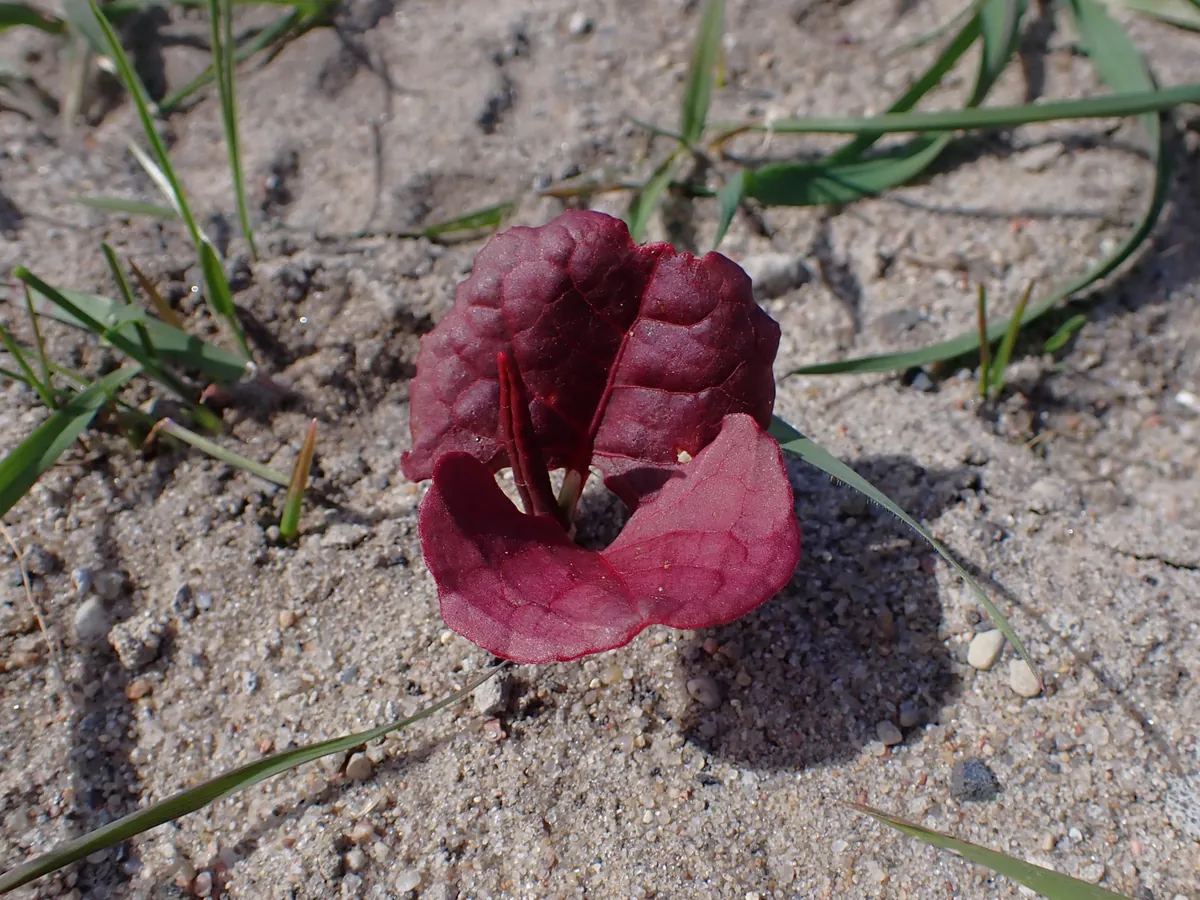
Reynoutria japonica(いたどり)の若い芽生え。ファイルページの記載どおり、撮影地はポーランド北西部Mielno(帰化・移入域)で、日本国内での撮影ではない。同一種の若芽を示す写真として採用。
写っているもの: Reynoutria japonica部位・状態: 若い芽生え(赤い若葉)
写真: Krzysztof Ziarnek, Kenraiz/ CC BY-SA 4.0/ 原画像/ 台帳の原画像
写真の範囲と来歴
被写体の確認: 原典の記載による同定。撮影地は日本ではなくポーランドの帰化域。種としては直接一致するが、生育地の文脈は日本のいたどり利用文化とは異なる点に留意。
掲載画像: リサイズ・トリミング・色調変更なし。Wikimedia Commons のオリジナル画像をそのまま使用。 表示用には幅1200px上限のWebPを配信し、台帳の原画像は上のリンクから確認できます。
On this page (8 sections)
Reading the bitterness
A Nara Prefecture presentation of regional cuisine describes itadori as a spring wild vegetable growing naturally in various parts of Japan. This account comes from one Nara dish-introduction page; it is not a botanical-geography survey of the plant's actual distribution.
A concrete example in the Nara regional-cuisine record is 「いたどりの煮もの」 (in translation: "simmered itadori"), identified as a dish containing itadori. The same record notes that preparation varies by region and household, so the entry does not go beyond the dish name and ingredient relationship.
The Ministry of Agriculture, Forestry and Fisheries' Kōchi Prefecture page on salt-preserved itadori describes itadori as a plant of the knotweed family, also called 「スカンポ」 (sukanpo), and states that the new shoots appearing from March to early May are eaten. The words the page uses for the raw taste are 「酸味」 (in translation: "sourness") and 「えぐみ」 (in translation: "harshness"). These two words cannot simply be substituted for a bitterness measurement.
In the Kōchi Prefecture salt-preservation record, itadori is peeled, cut into even lengths, coated with salt, and stored under a weighted press. Before eating, it is soaked in water for several hours to remove the salt. The salt-preserved itadori is used in stir-fried simmered dishes, 「きんぴら」 (kinpira), and simmered dishes, as well as in the filling for 「土佐ずし」 (Tosa-zushi). This is a record that can be read continuously, from the preservation process through to the several dishes that follow from it.
Another Kōchi Prefecture introduction states that, for immediate eating, the peeled itadori is passed through boiling water and heated for about 2 minutes until it turns an ochre color, then soaked in water for half a day to overnight. For freezing, 5-6% salt is sprinkled on, left for several hours to a day, then the water is squeezed out and the itadori wrapped in single-use portions. When it is used, the procedure is to soak it in water until the sourness is gone; this is not a test that compared storage temperatures or periods.
Sources for this overview
Checked for this overview: Checked the Nara record's classification of itadori as a spring wild vegetable. / Checked that the Nara record lists simmered itadori as regional cuisine.
Checked for this overview: Used for the knotweed-family classification, the alternate name, the new-shoot season, the terms sourness and harshness, and the non-sensory qualification. / Used to describe peeling, cutting, salting, weighting with a press, the several hours of desalting, and the culinary uses.
Checked for this overview: Used to describe the about 2 minutes of heating and the half-day-to-overnight water soak for the case where it is not preserved. / Used to describe the 5-6% salt, the several hours to a day, freezing in single-use portions, the water soak at time of use, and the qualification that this is not a comparative preservation test.
Follow the connections
simmered itadori (itadori no nimono) →includes→ itadori (Japanese knotweed)
Structured claims — open a section to read each claim's confidence, evidence and limits
Composition and content (1)
Scope: The Kōchi Prefecture salt-preserved itadori entry in the Ministry of Agriculture, Forestry and Fisheries' 「にっぽん伝統食図鑑」 (Nippon Dentōshoku Zukan)
Note: A record of the plant, edible part, and season within a Kōchi Prefecture traditional-food introduction. Not a distribution survey that examined the nationwide harvest period.
Show data
ingredient-itadori —is_documented_as_having→ "The Ministry of Agriculture, Forestry and Fisheries' Kōchi Prefecture salt-preservation page states that itadori is a plant of the knotweed family, also called sukanpo, and that the new shoots appearing from March to early May are eaten"How processing and cooking change it (3)
Scope: Salt-preserved itadori of Kōchi Prefecture, as recorded in the Ministry of Agriculture, Forestry and Fisheries' 「にっぽん伝統食図鑑」 (Nippon Dentōshoku Zukan)
Note: A cultural record that does not give the amount of salt, the weight of the press, or the storage period. It lists stir-fried simmered dishes, kinpira, simmered dishes, and the filling for Tosa-zushi as ways of eating the salt-preserved product.
Show data
ingredient-itadori —is_preserved_by→ "The Ministry of Agriculture, Forestry and Fisheries' Kōchi Prefecture salt-preservation page states that itadori is peeled, cut to even lengths, coated with salt, weighted down with a press to salt-cure it, and, before eating, soaked in water for several hours to remove the salt"Scope: 1 itadori preparation procedure in Kōchi Prefecture's 「おいしい風土こうち」 (in translation: "Delicious Kōchi Climate")
Note: A process introduction for home cooking, not an experiment that compared the amount or temperature of the water, or changes in composition or sensory attributes.
Show data
ingredient-itadori —is_processed_by→ "The Kōchi Prefecture preparation introduction states that, when eating without preserving it, the peeled itadori is passed through boiling water and heated for about 2 minutes until it turns an ochre color, then soaked in water for half a day to overnight"Scope: 1 freezer-storage procedure in Kōchi Prefecture's 「おいしい風土こうち」 (in translation: "Delicious Kōchi Climate")
Note: A home-cooking procedure that does not give the storage temperature, period, or changes in quality. It states that, when used, the itadori is soaked in water until the sourness is gone, but there is no measured value for the decrease in sourness.
Show data
ingredient-itadori —is_preserved_by→ "The Kōchi Prefecture preservation introduction states that 5-6% salt is sprinkled on peeled itadori, which is left for several hours to a day, then the water is squeezed out, the itadori is wrapped in single-use portions, and it is frozen"Culture (2)
Scope: A Nara Prefecture entry in the Uchi no Kyodo Ryori regional-cuisine record.
Note: A record of how the original describes it in food culture, not a botanical-geography study of distribution.
Show data
ingredient-itadori —is_presented_as→ "A spring wild vegetable growing naturally across Japan."Scope: A Nara Prefecture entry in the Uchi no Kyodo Ryori regional-cuisine record.
Note: Recorded as a Nara simmered dish; the page says recipes differ by region and household.
Show data
dish-itadori-nimono —includes→ ingredient-itadori