kogomi (ostrich fern)
ingredient / ingredient-kogomi
こごみ
Kogomi (ostrich fern) is a spring wild vegetable referring to young ostrich fern shoots in a Toyama Prefecture record. Kugomi and kogome are also recorded as regional names.
Photographs (captions in Japanese)
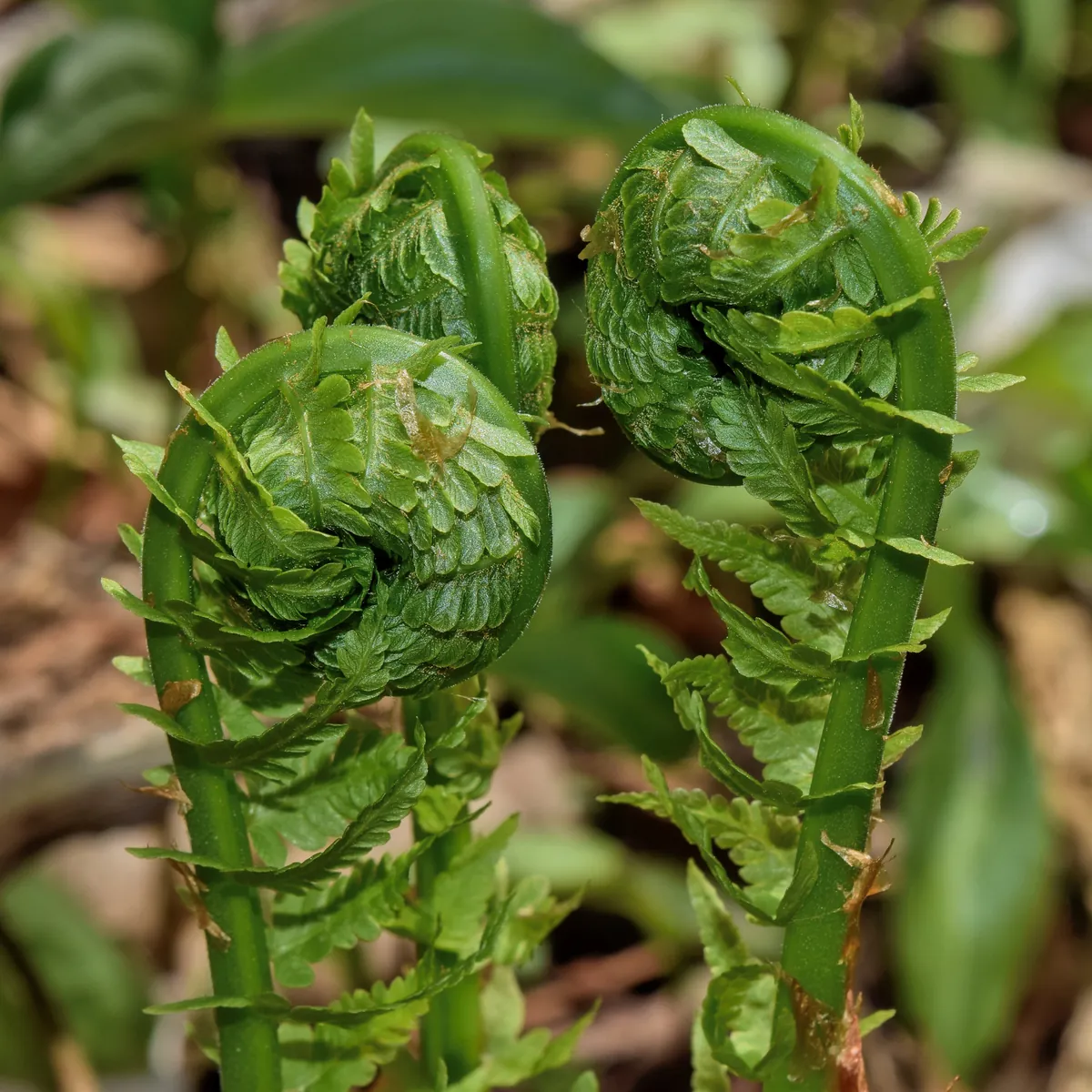
クサソテツ(Matteuccia struthiopteris)の渦巻き状の新芽(フィドルヘッド)。富山県の記録ではこの新芽を「こごみ」と呼ぶ。
写っているもの: Matteuccia struthiopteris(クサソテツ)部位・状態: 渦巻き状の新芽(フィドルヘッド)
写真: The Cosmonaut/ CC BY-SA 2.5/ 原画像/ 台帳の原画像
写真の範囲と来歴
被写体の確認: 原典の記載による同定。撮影地はカナダ・オンタリオ州。こごみと同一種の新芽であり、渦巻き形状が明確に視認できる。 原表記: CC BY-SA 2.5 Canada
掲載画像: Wikimedia Commons の原寸ファイル。苦味研究所では切り抜き・色調変更なし。 表示用には幅1200px上限のWebPを配信し、台帳の原画像は上のリンクから確認できます。
On this page (8 sections)
Reading the bitterness
Kogomi (kugomi) is a name for the young shoots of the ostrich fern. The main text of a record of the regional dish 「つぼ煮」 (in translation: "tsubo-ni simmered dish") in Tateyama, Toyama Prefecture, calls the main ingredient 「くごみ」 (in translation: "kugomi") and says it is also called 「こごみ」 (in translation: "kogomi") in some regions. The recipe note in the same record, however, says 「富山県ではこごめ、こごみ」 (in translation: "in Toyama Prefecture, kogome and kogomi"). Thus even within the same source, the attribution of these names varies. It does not directly give a scientific name.
The same record introduces the regional dish 「つぼ煮」 (in translation: "tsubo-ni simmered dish") as one made with kugomi. The record reports that kugomi picked in spring can be sun-dried and stored so the dish can be made regardless of season. It does not describe how drying affects components or flavor.
Akita Prefecture's 「あきた元気ムラ」 (Akita Genki Mura) gives the season for kogomi as late April to late May. However, the same page adds that because the harvesting time for sansai varies by region and weather, this should be read as a reference. The calendar period is not a season that begins and ends uniformly nationwide, but can be read as a guideline shown by Akita's introduction page.
The same Akita Prefecture page's 「こごみのごま和え」 (in translation: "kogomi dressed with sesame") is boiled until it turns a vivid green, cooled in cold water, drained and cooled, and then dressed with sesame, miso, and mirin. An alternative version dressed with vinegared miso or mayonnaise is also given. This is not an experiment that fixed amounts or cooking times, but a cooking record that shows what color the spring shoot is lifted out at and what it is combined with.
Wakayama Prefecture's introduction records the season of kogomi from Akitsugawa, Tanabe City, as April, with shipping from April to early May. Besides being lightly boiled for salads or dressed dishes, it is also used in tempura, stir-fries, pasta, and gratin. On the other hand, the page states that it is not suited to dried storage and cites lightly boiling and freezing, or bottling, as methods. This is not a test that compared storage periods or quality, but a way of handling recorded in the prefecture's ingredient introduction.
Sources for this overview
Checked for this overview: Checked the names kugomi, kogomi, and kogome in the Toyama Prefecture record. / Checked the statement that tsubo-ni can be made throughout the year with sun-dried kugomi picked in spring.
Checked for this overview: Used to describe late April to late May and the note on regional and weather differences / Used to describe the color after boiling, the cold water, draining, seasoning ingredients, the alternative version, and the scope of the recipe
Checked for this overview: Used to describe the statement that it is not suited to dried storage, the freezing and bottling methods after light boiling, and the scope that this is not a storage-comparison test / Used to describe the season and shipping period for Akitsugawa produce / Used to describe the uses in lightly boiled salads, dressed dishes, tempura, stir-fries, pasta, and gratin
Other names: くごみ (ja)
Follow the connections
tsubo-ni (simmered sansai dish) →includes→ kogomi (ostrich fern)
Structured claims — open a section to read each claim's confidence, evidence and limits
How processing and cooking change it (3)
Scope: 1 recipe for kogomi dressed with sesame, published on Akita Prefecture's 「あきた元気ムラ」 (Akita Genki Mura)
Note: A simple recipe that does not give amounts or cooking time. The page also gives an alternative version dressed with vinegared miso or mayonnaise. This is not a sensory test that compared bitterness or texture.
Show data
ingredient-kogomi —is_prepared_with→ "Akita Prefecture's 「こごみのごま和え」 (in translation: "kogomi dressed with sesame") is boiled until it turns a vivid green, cooled in cold water, drained, and then dressed with sesame, miso, and mirin"Scope: Kogomi from Akitsugawa, Tanabe City, introduced by Wakayama Prefecture's Nishimuro Promotion Bureau
Note: This is a recommendation in the prefecture's ingredient introduction, not an experiment that compared storage period, temperature, or quality change. It differs in region, use, and source body from the sun-dried kugomi used in Toyama Prefecture's tsubo-ni simmered dish.
Show data
ingredient-kogomi —is_preserved_by→ "Wakayama Prefecture's ingredient introduction states that kogomi is not suited to dried storage, and cites lightly boiling it and then freezing it, or bottling, as suitable storage methods"Scope: Kogomi from Akitsugawa, Tanabe City, introduced by Wakayama Prefecture's Nishimuro Promotion Bureau
Note: These are culinary uses listed in the prefecture's ingredient introduction, not a survey that measured cooking conditions or usage frequency within the region.
Show data
ingredient-kogomi —is_used_in→ "Wakayama Prefecture's ingredient introduction states that kogomi is used, lightly boiled, in salads, dressed dishes, tempura, stir-fries, pasta, and gratin"Culture (4)
Scope: A local-cuisine record from Ashikuraji, Tateyama Town, Toyama Prefecture
Note: The source records it as an alternate name for the young shoots of ostrich fern. It does not directly give a scientific name. Where the body text and the recipe note disagree on the regional attribution of the names, both are kept as stated in the original (re-confirmed against the original text on 2026-09-01).
Show data
ingredient-kogomi —has_local_name→ "The body of the source calls the main ingredient 「くごみ」 (in translation: "kugomi," an alternate name for the young shoots of ostrich fern), stating that in some regions it is also called 「こごみ」 (in translation: "kogomi"). The recipe note in the same source states 「富山県ではこごめ、こごみ」 (in translation: "in Toyama Prefecture it is called kogome, kogomi"), so the attribution of the names to a region is inconsistent within the source itself."Scope: A local-cuisine record from Ashikuraji, Tateyama Town, Toyama Prefecture.
Note: The record says it can be made regardless of season because it uses dried kugomi picked in spring and sun-dried.
Show data
dish-tsubo-ni —includes→ ingredient-kogomiScope: The reference season in Akita Prefecture's 「あきた元気ムラ」 (Akita Genki Mura) 2022 sansai introduction
Note: The page itself notes that the harvesting time varies by region and weather. This is not a nationwide season or a fixed harvesting period.
Show data
ingredient-kogomi —is_documented_as_having→ "Akita Prefecture's sansai introduction page gives the season for kogomi as late April to late May"Scope: Kogomi from Akitsugawa, Tanabe City, introduced by Wakayama Prefecture's Nishimuro Promotion Bureau
Note: This is a season given in the prefecture's ingredient introduction, not a statistic showing a nationwide season or a fixed annual shipping period.
Show data
ingredient-kogomi —is_documented_as_having→ "Wakayama Prefecture's ingredient introduction gives the season for kogomi from Akitsugawa, Tanabe City, as April, and the shipping period as April to early May"