ssumbagwi greens
ingredient / ingredient-ssumbagwi-greens
スンバグィ(씀바귀)
Ssumbagwi greens: a spring namul ingredient in Korea using the roots and young leaves of 씀바귀 (Ixeris dentata). Records describe briefly boiling it and soaking it in water to adjust its bitterness.
Photographs (captions in Japanese)
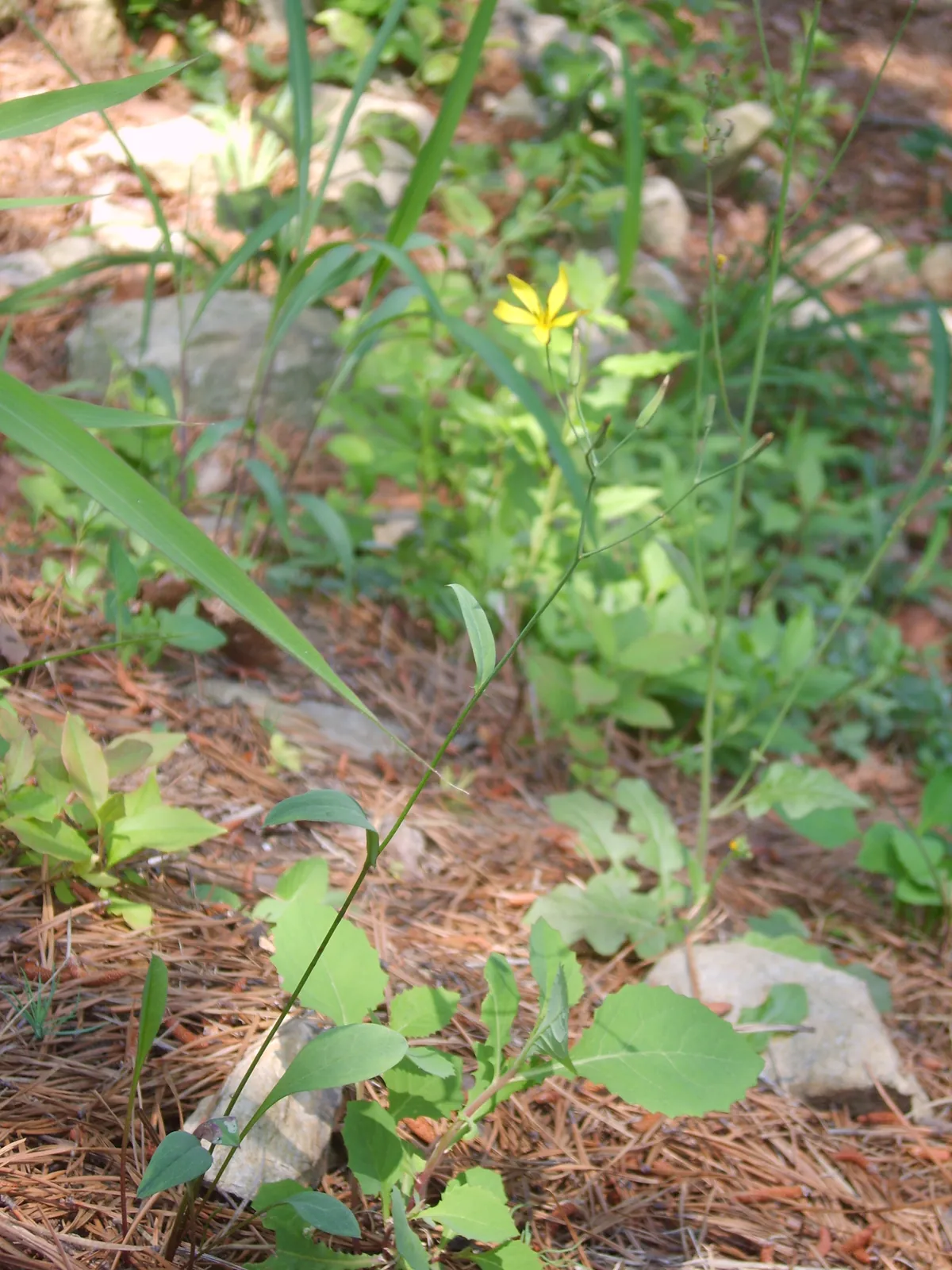
Ixeris dentata(씀바귀)の全草。学名が対象記述(韓国産씀바귀の根・若葉利用食材)と完全一致する。
写っているもの: Ixeris dentata部位・状態: 全草(花・葉)
写真: Dalgial/ CC BY-SA 3.0/ 原画像/ 台帳の原画像
写真の範囲と来歴
被写体の確認: 原典の記載による同定。
掲載画像: リサイズ・トリミング・色調変更なし。Wikimedia Commons のオリジナル画像をそのまま使用。 表示用には幅1200px上限のWebPを配信し、台帳の原画像は上のリンクから確認できます。
On this page (7 sections)
Reading the bitterness
Ssumbagwi (씀바귀) is a spring-heralding namul ingredient in Korea using the roots and young leaves of the plant Ixeris dentata. An encyclopedia entry published by the Academy of Korean Studies introduces this vegetable as a representative early-spring namul whose roots and young leaves are gathered.
The same entry states that the roots and young leaves are briefly boiled and soaked in water to remove bitterness, then stir-fried or seasoned before eating. It gives no boiling or soaking duration and does not state how much bitterness remains afterward; differences in eating frequency by region or household cannot be determined from the encyclopedia's general description.
Sources for this overview
Checked for this overview: The scope in which the encyclopedia description of eating roots and young leaves as spring namul was confirmed. / The scope in which the description as a representative spring namul gathered in early spring was confirmed. / The scope in which the process of briefly boiling and soaking in water to remove bitterness was confirmed.
Follow the connections
ssumbagwi greens →is used as→ Ixeris dentata
ssumbagwi kimchi →includes→ ssumbagwi greens
Hypotheses and recipe candidates for this entry are on the Japanese page.
Structured claims — open a section to read each claim's confidence, evidence and limits
How processing and cooking change it (3)
Scope: A candidate structural component of a dish. Regional variation in ingredients is unconfirmed
Note: Source not connected. Does not indicate quantities or cooking conditions.
No source connected — this claim has not been verified yet. It is a general-knowledge placeholder, not a confirmed statement.
Show data
dish-ssumbagwi-kimchi —includes→ ingredient-ssumbagwi-greensScope: Public encyclopedia of the Academy of Korean Studies
Note: Eating frequency by region or cultivar is not given.
Show data
ingredient-ssumbagwi-greens —is_eaten_as→ "A representative spring namul whose roots and young leaves are gathered in early spring."Scope: a public encyclopedia from the Academy of Korean Studies
Note: Time, temperature, and residual bitterness are not quantified.
Show data
ingredient-ssumbagwi-greens —is_prepared_by→ "briefly boiled, then soaked in water to remove bitterness before being stir-fried or seasoned"Culture (1)
Scope: Spring namul in Korea, where roots and young leaves are eaten in early spring
Note: Connected to the public encyclopedia of the Academy of Korean Studies.
Show data
ingredient-ssumbagwi-greens —is_used_as→ organism-ixeris-dentata