Nanyang coffee
ingredient / ingredient-kopi
コピ / kopi (Nanyang coffee)
Nanyang coffee is a coffee drunk in Southeast Asia, principally Malaysia and Singapore and Chinese migrant tea-and-coffee cultures extending from the Dutch East Indies, made by roasting robusta beans with margarine and sugar. Often served with sweetened condensed milk. It spread with the "kopitiam (coffee shop)" business format.
Photographs (captions in Japanese)
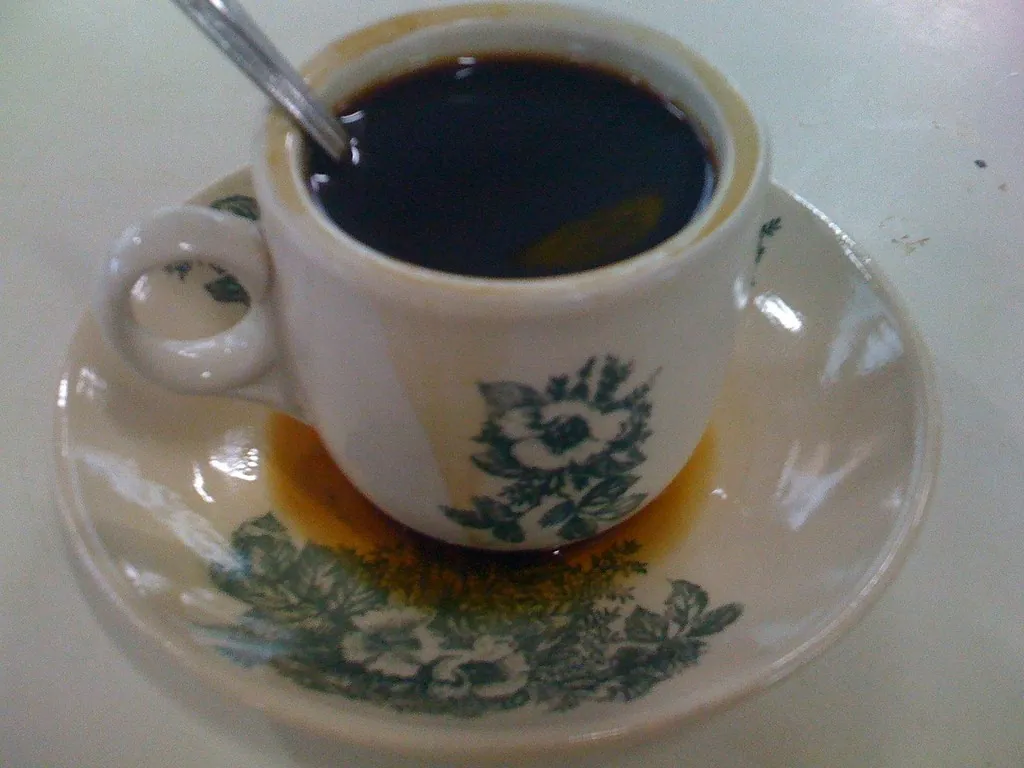
花柄のカップに注がれた、砂糖とバターで焙煎した豆による黒いコピー(コピオー)。
加工後写っているもの: Coffea(種不明。砂糖とバターで焙煎した豆による無乳の黒コーヒー、コピ O)部位・状態: 抽出した飲料(黒コーヒー、加糖・無乳の状態)
写真: Digital Terrorist/ CC BY-SA 2.0/ 原画像/ 台帳の原画像
写真の範囲と来歴
被写体の確認: 原典の記載による同定。説明文「シンガポールで一般的なコピーOのカップ。砂糖とバターで焙煎した豆による無乳の黒コーヒー」。加糖練乳入りではなく無乳(O)の変種である点に留意。 画像を開き、黒く濃い色の液体がカップになみなみと注がれているのを確認した。ミルクは加えられていない。
掲載画像: Wikimedia Commons の原本と同寸。切り抜き・色調変更なし。 表示用には幅1200px上限のWebPを配信し、台帳の原画像は上のリンクから確認できます。
On this page (9 sections)
Reading the bitterness
Kopi (Nanyang coffee) is coffee made by roasting robusta beans with margarine and sugar, drunk in Chinese Southeast Asian coffee-shop culture centered on Malaysia and Singapore. According to a Singapore Chinese Cultural Centre account, Hainanese roasters began frying the then-cheap robusta beans, described as markedly bitter, with margarine and sugar to give them a caramel-like flavor. This source is a popular article, however, not an academic study of migration history. A Singapore government-linked portal describes a traditional roasting ratio of eight parts beans to two parts sugar and margarine.
The same portal introduces kopi as "Hainanese-style kopi (coffee)", placing it among ordinary brewed coffee drinks. In a traditional serving technique, kopi or teh grounds are strained through a cotton bag, stirred with a stick or long chopsticks, then poured between 2 large enamel jugs with long spouts. This is described as exposing the drink to air to cool it; it is recorded as a serving step separate from roasting.
In Indonesia, kopitiam culture is described as beginning in Singkawang, West Kalimantan (near Pontianak), in the early 1930s, before spreading to parts of Sumatra (Bangka Belitung, Pekanbaru, Bandar Lampung, and Medan) and the Riau Islands, according to local news media. An article in a specialist coffee magazine says pioneers added margarine or butter to dark-roasted robusta during roasting; these sources do not explicitly connect that method to bitterness.
Kopi differs from Ipoh white coffee (「イポー白珈琲」), arising from the same Hainanese roasting culture, in its added ingredients. Ordinary black kopi is roasted with both margarine and sugar; specialist coffee media explain that Ipoh white coffee is roasted with margarine alone (or with less sugar than usual), yielding a lighter roast and paler color than kopi.
Sources for this overview
The history and origins of kopi in Singapore
Checked for this overview: Used to support robusta's bitterness and the account of Hainanese roasting origins.
Traditional Breakfast of Kaya and Kopi
Checked for this overview: Used to support the traditional ratio of beans to sugar and margarine. / Used to support its classification as a coffee drink. / Used to support the description of the pouring-based serving technique.
Budaya Ngopi di Kopitiam Sudah Ada Sejak Berabad Lalu di Asia Tenggara
Checked for this overview: Used to support the account of where it began and spread in Indonesia.
Mengenal Kopi Tiam, Kopi Tradisional Khas Asia
Checked for this overview: Used to support the description of the dark-roasted robusta method.
Ipoh White Coffee: The Story Of The Famous Malaysian Drink
Checked for this overview: Used to support the difference in added ingredients from Ipoh white coffee.
Other names: kopi (ms), kopitiam (ms)
Follow the connections
Nanyang coffee →is processed by→ Nanyang kopi roasting
Nanyang coffee →is a type of→ coffee brew →shows the sensory response→ bitterness
Ipoh white coffee →differs from→ Nanyang coffee
Hypotheses and recipe candidates for this entry are on the Japanese page.
Structured claims — open a section to read each claim's confidence, evidence and limits
Composition and content (1)
Note: Connects to the existing entry ingredient-coffee-brew.
Show data
ingredient-kopi —is_a_type_of→ ingredient-coffee-brewHow processing and cooking change it (3)
Scope: Chinese-heritage café culture of Southeast Asia, including Malaysia and Singapore
Show data
ingredient-kopi —is_processed_by→ process-nanyang-kopi-roastingScope: Singapore's traditional kopi and teh serving technique (NHB Roots)
Note: Before research began, this fat-roasting method was assumed to be called a "kopi tarik–style process," but the NHB Roots material describes roasting (with margarine and sugar) and the pour-back serving technique as separate processes. The same source does not use the word "tarik" itself, so this page does not record a name for the serving technique.
Show data
ingredient-kopi —is_prepared_by→ "Kopi (or teh) powder is strained through a muslin bag, stirred with a stick or a pair of long chopsticks, and then poured back and forth between 2 large enamel jugs with long spouts. The source explains this motion as a way of aerating and cooling the brew. This serving and mixing process is separate from the roasting method itself."Scope: The distinction drawn within Malaysia and Singapore's kopi culture
Show data
ingredient-ipoh-white-coffee —differs_from→ ingredient-kopiCulture (3)
Scope: The account handed down among Singapore's Hainanese coffee roasters
Note: The source is a general-audience article from the Singapore Chinese Cultural Centre, and its footnote references a separate NHB Roots article. It is not itself an academic study of migration history.
Show data
ingredient-kopi —has_historical_origin→ "The record from the Singapore Chinese Cultural Centre states that Hainanese roasters began giving robusta beans — inexpensive at the time and described as significantly more bitter — a caramelised character by frying them with margarine and sugar (a period after the Second World War is suggested)."Scope: Indonesia (West Kalimantan, Sumatra)
Note: Both are accounts from Indonesian news and commercial media, not academic studies of migration or food-culture history. No statement explicitly addressing the relationship to bitterness could be confirmed in these sources (they go only as far as the phrase "very strong flavor").
Show data
ingredient-kopi —is_consumed_in→ "In Indonesia, the sources state that kopitiam culture began in the early 1930s in Singkawang, West Kalimantan (near Pontianak), and later spread to various parts of Sumatra (Bangka Belitung, Pekanbaru, Bandar Lampung, Medan) and the Riau Islands. A local coffee specialty shop's account explains that the pioneers added margarine or butter to dark-roasted robusta beans during the roasting process."Scope: 19th-20th centuries, following migration to Malaya, Singapore, and the Dutch East Indies
Show data
culture-hainanese-nanyang —is_associated_with→ ingredient-kopi