nigana greens
ingredient / ingredient-nigana
ニガナ(ンジャナ)
Nigana greens: a leafy ingredient called njana or nigana in Okinawa: the leaves of (hosoba-wadan; Crepidiastrum lanceolatum). Used in shiraae and soups.
Photographs (captions in Japanese)
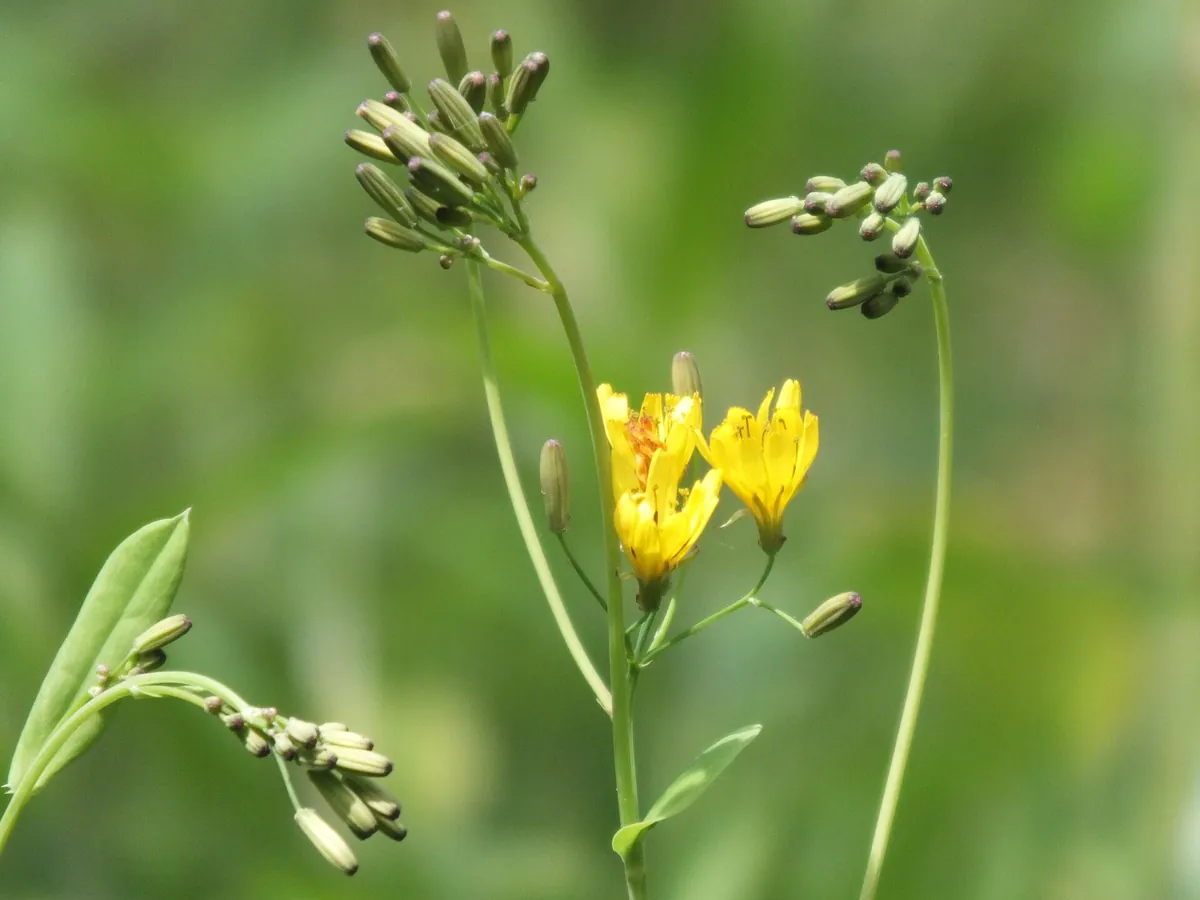
ニガナ(Ixeris dentata)。細く枝分かれした花茎の先に、花弁の少ない黄色い頭花が数輪開き、周囲に開花前の蕾が並ぶ。食用に使われるのは主に若葉だが、本写真は開花期の地上部を示す。
写っているもの: Ixeris dentata部位・状態: 細い花茎の先に咲いたニガナ(Ixeris dentata)の黄色い頭花と蕾。葉の一部も画面下に見える
写真: 松岡明芳/ CC BY-SA 3.0/ 原画像/ 台帳の原画像
写真の範囲と来歴
被写体の確認: 原典の記載による同定。写真は開花期の地上部で、食用として利用される若葉の状態を直接示すものではない。撮影地は「やしろの森公園」(原典キャプションより)。
掲載画像: Wikimedia Commons の1920px版。苦味研究所では切り抜き・色調変更なし。 表示用には幅1200px上限のWebPを配信し、台帳の原画像は上のリンクから確認できます。
On this page (8 sections)
Reading the bitterness
The leafy food called njana or nigana in Okinawa is the leaf of 「ホソバワダン」 (hosoba-wadan; Crepidiastrum lanceolatum). Okinawa Prefecture's traditional food-culture database explicitly identifies njana-baa with hosoba-wadan and says it is usually called nigana; the academic database GBIF also records Crepidiastrum lanceolatum as an accepted species. The name 「ニガナ」 (in translation: "nigana") alone does not identify a plant, however; it cannot automatically be equated with other plants called nigana elsewhere. The bitterness particular to these leaves has long been used in Okinawan home cooking.
Okinawan sources describe the leaf as bitter and used in shiraae and soups. One recipe calls for cutting the leaves into thin strips, soaking them in water to remove harshness, then draining them, but gives neither soaking duration nor number of repetitions. Another prefectural database mentions 「さっとゆでる」 (in translation: "boiling briefly"), suggesting variation in preparation among households and sources. A dressed dish combining njana and island tofu appears in several Okinawa Prefecture sources.
Sources for this overview
Checked for this overview: Checked the record identifying njana as hosoba-wadan. / Checked the record of a dressed dish with njana and island tofu.
Crepidiastrum lanceolatum (Houtt.) Nakai
Checked for this overview: Checked the scientific name in the academic database GBIF.
Checked for this overview: Checked the record of leaf bitterness and its use in shiraae and soups. / Checked the steps of thin slicing and water soaking to remove harshness.
Follow the connections
nigana greens →is used as→ Crepidiastrum lanceolatum
nigana shiraae →includes→ nigana greens
Structured claims — open a section to read each claim's confidence, evidence and limits
Composition and content (1)
Scope: The Okinawan ingredient njana / nigana
Note: Connected to Crepidiastrum lanceolatum (hosoba-wadan) through a prefectural source and GBIF. Not automatically merged with a different plant that shares a similar name.
Show data
ingredient-nigana —is_derived_from→ organism-hosobawadanHow processing and cooking change it (2)
Scope: Main ingredients shared by two Okinawa Prefecture food-culture sources.
Note: Uses njana from hosoba-wadan and island tofu.
Show data
dish-nigana-shiraae —includes→ ingredient-niganaScope: A recipe for njana-baa-suunee from Okinawa Prefecture.
Note: Another prefectural database also gives the method 『さっとゆでる』 (in translation: "boil briefly"); the difference among households and sources is retained. Confidence calibration (2026-08-31 review): because the basis consists only of public and news accounts of food culture, the status changed from supported to contextual.
Show data
ingredient-nigana —is_prepared_by→ "Cut leaves into thin strips, soak them in water to remove harshness, then drain."Culture (1)
Scope: The leaves of Crepidiastrum lanceolatum (hosoba-wadan), eaten in Okinawa as njana / nigana
Note: An ingredient source originating from Okinawa Prefecture records the leaves' bitterness and their use in shira-ae (a tofu-dressed dish) and soups. Confidence calibration (2026-08-31 review): downgraded from supported to contextual, since the grounds are only public and press cultural records.
Show data
ingredient-nigana —is_used_as→ organism-hosobawadan