Crepidiastrum lanceolatum
organism / organism-hosobawadan
ホソバワダン / Crepidiastrum lanceolatum (Houtt.) Nakai
Hosobawadan, called njanabā or nigana in Okinawa; its leaves are eaten.
Photographs (captions in Japanese)
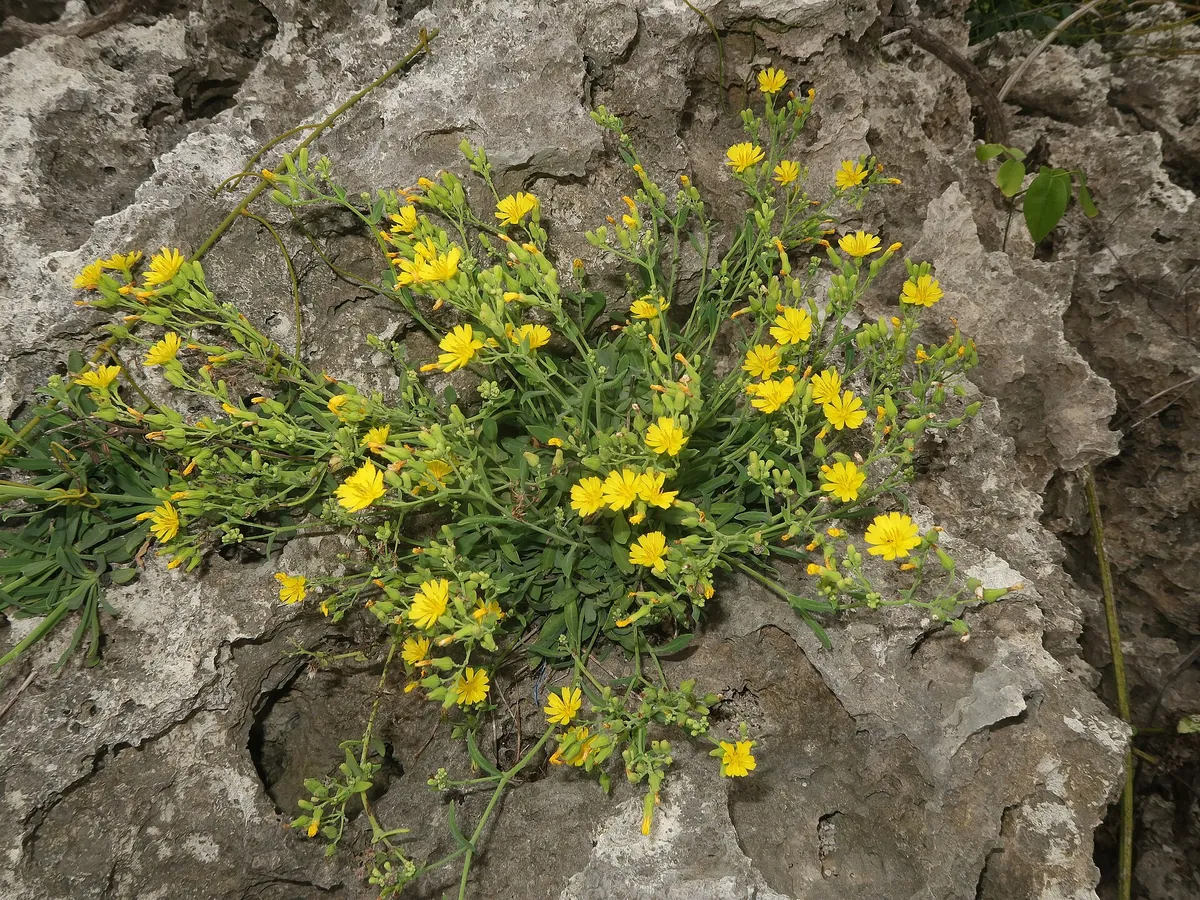
ホソバワダン(Crepidiastrum lanceolatum)の生育株。宮古島の石灰岩上に自生し、へら状の葉と黄色いキク科の頭花が見える。
写っているもの: Crepidiastrum lanceolatum (Houtt.) Nakai部位・状態: 石灰岩上に生育する株の、へら状の葉と黄色いキク科の頭花
写真: Qwert1234/ CC BY-SA 4.0/ 原画像/ 台帳の原画像
写真の範囲と来歴
被写体の確認: 原典の記載による同定。原典ページは沖縄県宮古島の野外個体として記載。専門家による再同定は行っていない。
掲載画像: Wikimedia Commons の1920px版。苦味研究所では切り抜き・色調変更なし。 表示用には幅1200px上限のWebPを配信し、台帳の原画像は上のリンクから確認できます。
On this page (8 sections)
Reading the bitterness
Hosobawadan (Crepidiastrum lanceolatum) is a member of the aster family called 「ンジャナバー」 (in translation: "njanabā") or 「ニガナ」 (in translation: "nigana") in Okinawa, where its leaves are eaten. Prefectural material on traditional food culture records the leaves as bitter and used in shira-ae and soups. This record concerns Okinawan hosobawadan specifically; it does not establish every way the plant is used in cooking.
Importantly, the plant usually called 「ニガナ」 (in translation: "nigana") in Okinawa differs from another plant commonly called 「ニガナ」 (in translation: "nigana") in other regions. The prefectural material notes the difference but does not give the scientific name of the other region’s nigana, so they should not simply be treated as the same species.
Sources for this overview
Checked for this overview: Confirmed the description identifying njanabā as hosobawadan and noting that it is usually called nigana. / Confirmed the caution that this is a different plant from 「ニガナ」 (in translation: "nigana") elsewhere.
Checked for this overview: Confirmed the description of bitterness in its leaves and use in shira-ae and soups.
Crepidiastrum lanceolatum (Houtt.) Nakai
Checked for this overview: Confirmed the record that Crepidiastrum lanceolatum is an accepted species.
Other names: ンジャナバー (ryu), Crepidiastrum lanceolatum (Houtt.) Nakai (la)
Follow the connections
nigana greens →is used as→ Crepidiastrum lanceolatum
Structured claims — open a section to read each claim's confidence, evidence and limits
Composition and content (2)
Scope: The Okinawan ingredient njana / nigana
Note: Connected to Crepidiastrum lanceolatum (hosoba-wadan) through a prefectural source and GBIF. Not automatically merged with a different plant that shares a similar name.
Show data
ingredient-nigana —is_derived_from→ organism-hosobawadanScope: a caution about the plant name usually called 『ニガナ』 (in translation: "nigana") in Okinawa
Note: The scientific name of the contrasting plant is not given in the source. Not linked to Ixeris dentata.
Show data
organism-hosobawadan —is_not_synonymous_with→ "a different plant that Okinawa Prefecture's materials describe as 『一般的にニガナと呼ばれる』 (in translation: "commonly called nigana")"Culture (1)
Scope: The leaves of Crepidiastrum lanceolatum (hosoba-wadan), eaten in Okinawa as njana / nigana
Note: An ingredient source originating from Okinawa Prefecture records the leaves' bitterness and their use in shira-ae (a tofu-dressed dish) and soups. Confidence calibration (2026-08-31 review): downgraded from supported to contextual, since the grounds are only public and press cultural records.
Show data
ingredient-nigana —is_used_as→ organism-hosobawadan