phak khayaeng (rice paddy herb)
organism / organism-limnophila-aromatica
パックカヤエン / Limnophila aromatica (Lam.) Merr.
Phak khayaeng (rice paddy herb) is a strongly aromatic waterside herb also called ผักพา (phak pha) in the north. Served raw with larb, koi, som tam, and other dishes, and used to mask off-odors in bamboo-shoot dishes and stews.
Photographs (captions in Japanese)
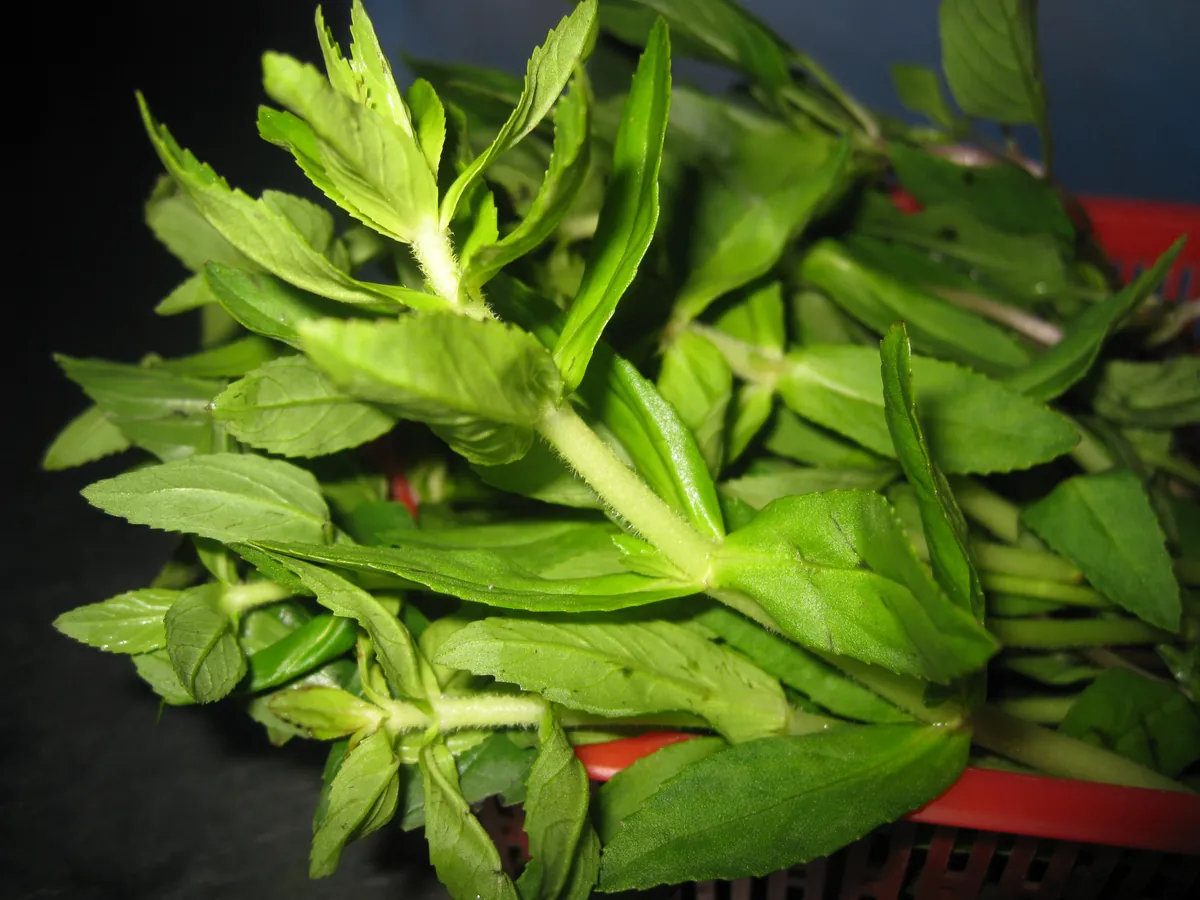
パクカヤエン(Limnophila aromatica)の植物体。北部タイでは phak khayaeng とも呼ばれ、ラープ・コーイ・ソムタムなどの薬味として生で添えられる香り強い水辺の草本。
写っているもの: Limnophila aromatica(パクカヤエン、rice paddy herb)部位・状態: 植物体
写真: Nguyễn Thanh Quang/ CC BY-SA 3.0/ 原画像/ 台帳の原画像
写真の範囲と来歴
被写体の確認: 原典の記載による同定。
掲載画像: Wikimedia Commons の原寸ファイル。苦味研究所では切り抜き・色調変更なし。 表示用には幅1200px上限のWebPを配信し、台帳の原画像は上のリンクから確認できます。
On this page (7 sections)
Reading the bitterness
Phak khayaeng (Limnophila aromatica), also called phak pha in northern Thailand, is a strongly aromatic herb growing near water. A university page compiling regional knowledge says that breaking its stems or leaves releases a sharp aroma and pungency. This entry describes aroma and pungency, not bitterness.
According to the same page, the whole plant, young shoots, and young leaves are eaten raw alongside larb, koi, jaeo, nam phrik, som tam, and bamboo-shoot soup. It also describes their use to add aroma and mask off-odors in sour soup, bamboo-shoot curry, and herb-rich stews.
Another entry in this encyclopedia records a region-specific form of larb made bitter with intestinal contents or bile. This source, however, refers only to larb in general and does not distinguish which form accompanies this herb. The descriptions of pungency and aroma come from a regional-knowledge page, not measurements by a sensory panel.
Sources for this overview
ผักแขยง สรรพคุณและประโยชน์ของผักแขยง
Checked for this overview: The university-run page describes a strong aroma and pungency released when the plant is broken. / The page describes serving it with larb, koi, and other foods and using it to mask off-odors in sour soup or curry. / The source refers to larb in general without distinguishing its bitter forms. / A methodological limit: the description comes from a regional-knowledge page, not a sensory panel.
Other names: ผักแขยง (th), phak khayaeng (th-Latn), ผักพา (th, identification medium), Limnophila aromatica (Lam.) Merr. (la)
Structured claims — open a section to read each claim's confidence, evidence and limits
Sensory (1)
Scope: Suan Sunandha Rajabhat University’s regional-knowledge page.
Show data
organism-limnophila-aromatica —has_sensory_attribute→ "ทั้งต้นและใบเมื่อนำมาหักจะมีกลิ่นหอมฉุนและเผ็ดร้อน (in translation: "When the stems and leaves are broken, they release a strong aroma and pungency")."How processing and cooking change it (1)
Scope: Suan Sunandha Rajabhat University’s regional-knowledge page.
Show data
organism-limnophila-aromatica —is_eaten_as→ "Eat the whole plant, young shoots, and young leaves raw with larb, koi, jaeo, nam phrik, som tam, or bamboo-shoot soup. Also use them for aroma and to mask off-odors in tom som, kaeng no mai, and various kaeng om dishes."