Melicope pteleifolia
organism / organism-melicope-pteleifolia
ピアクラティン / Melicope pteleifolia (Champ. ex Benth.) T.G.Hartley
Melicope pteleifolia is a member of the citrus family. A northern Thai ethnobotanical review (Inta et al., 2025) records its leaves and fruits as tasting bitter and says Karen, Lahu, and Thai Yuan people use it as an herb in chili pastes and spicy soups.
Photographs (captions in Japanese)
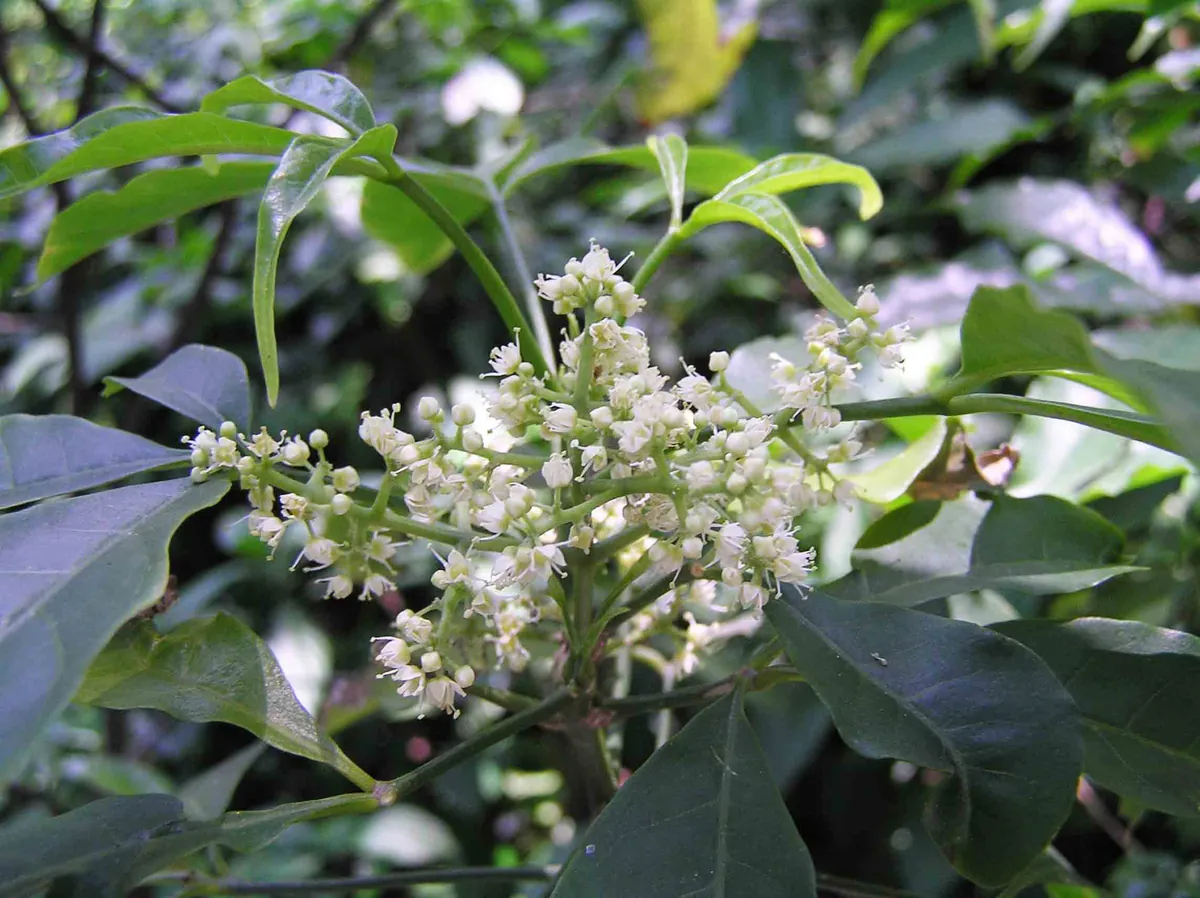
香港動植物公園(Hong Kong Botanical Garden)で撮影されたMelicope pteleifolia(中国語名 三椏苦/蜜茱萸)の葉と白い花序。北タイの自生地ではなく香港の植物園での撮影。
写っているもの: Melicope pteleifolia (Champ. ex Benth.) T.G.Hartley部位・状態: 葉と花序
写真: 阿橋 HQ/ CC BY-SA 2.0/ 原画像/ 台帳の原画像
写真の範囲と来歴
被写体の確認: 原典の記載による同定。同種(学名一致)の植物写真だが、撮影地は北タイの自生地ではなく香港の植物園。Commons上でこの学名の写真はこの1件のみ確認された。
掲載画像: リサイズ・トリミング・色調変更なし。Wikimedia Commons のオリジナル画像をそのまま使用。 表示用には幅1200px上限のWebPを配信し、台帳の原画像は上のリンクから確認できます。
On this page (6 sections)
Reading the bitterness
A northern Thai ethnobotanical review (Inta et al., 2025) records Melicope pteleifolia (Rutaceae) as a seasoning plant whose chopped leaves add aroma to chili pastes and spicy soups. The account centers on Karen use, but the same table also lists similar uses by Lahu and Thai Yuan people.
The same review’s table records the plant’s taste as "Bitter" and its aroma as "citrus". These are entries in a compiled table based on interviews or literature, not values measured in a sensory test. The review does not identify individual informants or sample conditions.
The same compiled table also has a row for entire fruits, in addition to leaves, with taste recorded as Bitter and aroma as citrus. It says Thai Yuan people use the fruit to flavor spicy meat soup, showing a different plant part and use from the leaf records for Karen, Lahu, and Thai Yuan people.
Sources for this overview
Checked for this overview: Confirmed the account of use as a seasoning by Karen, Lahu, and Thai Yuan people. / Confirmed that the taste and aroma descriptions are entries in a table, not sensory-test results. / Confirmed that bitterness is also recorded for the fruits.
Structured claims — open a section to read each claim's confidence, evidence and limits
Sensory (2)
Scope: Northern Thailand, Karen record.
Note: A taste entry in an ethnobotanical review table, not a sensory test. The taste field is shared across use entries for Karen, Lahu, and Thai Yuan people.
Show data
organism-melicope-pteleifolia —has_sensory_attribute→ "Bitter (recorded together with a citrus-like aroma)."Scope: Layer: Literature (compiled table in an ethnobotanical review). A row concerning another plant part (the fruit), separate from the leaf record elsewhere in the same review.
Show data
organism-melicope-pteleifolia —has_sensory_attribute→ "The compiled table records entire fruits of the same species, as well as leaves, with Bitter taste and citrus aroma, and says Thai Yuan people use the fruits to flavor spicy meat soup."How processing and cooking change it (1)
Scope: Northern Thailand (a Karen record, with similar uses recorded for Lahu and Thai Yuan people).
Note: An entry in Table 1 of an ethnobotanical review (Inta et al., 2025, Heliyon). Frequency of use was recorded as 6.6%.
Show data
organism-melicope-pteleifolia —is_used_as→ "Chopped leaves are added as an aromatic seasoning to chili pastes and spicy soups."