Platycodon grandiflorus
organism / organism-platycodon-grandiflorus
キキョウ
Balloon flower. Its root (doraji, kikyō root) is used as food and as a crude drug in East Asia.
Photographs (captions in Japanese)
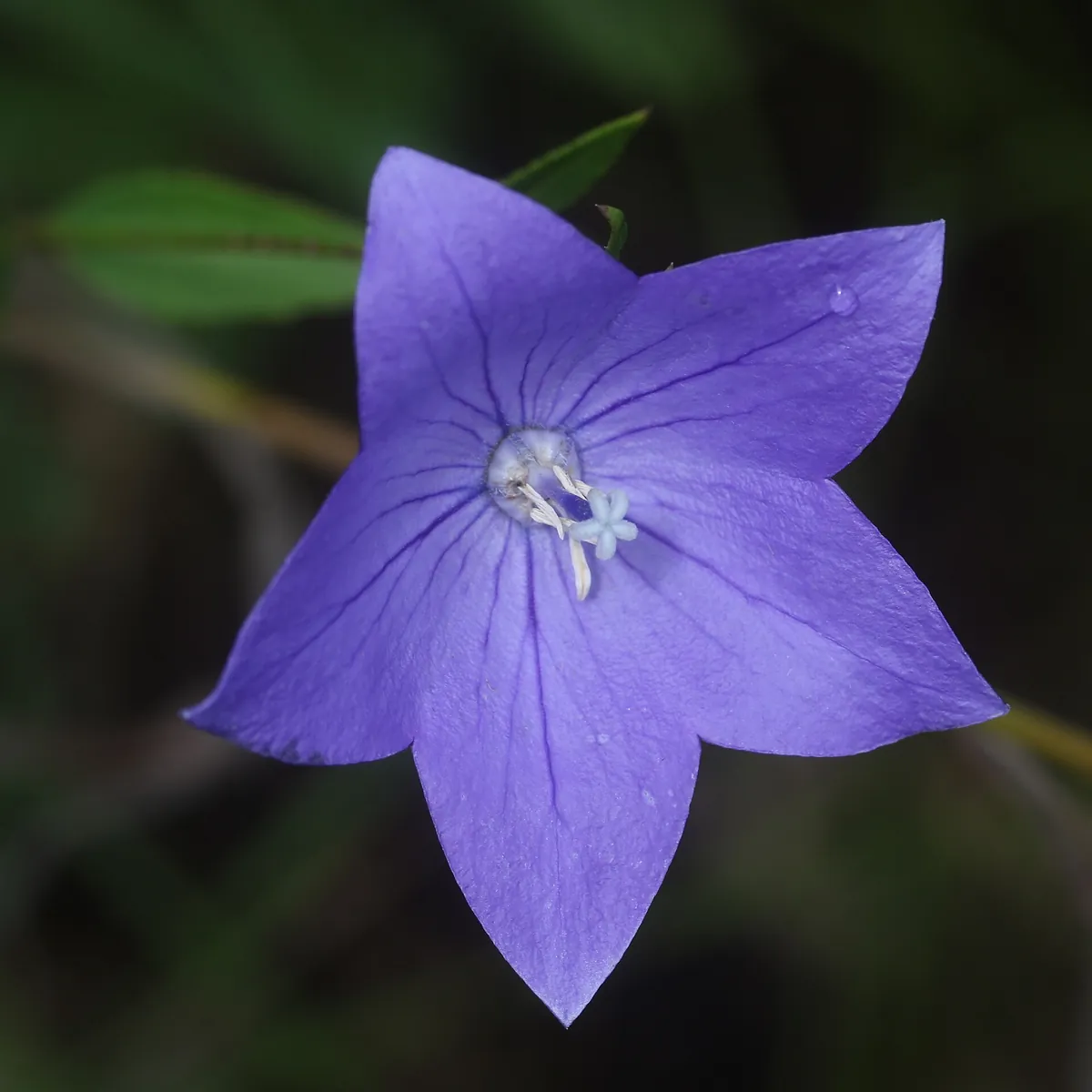
キキョウ(Platycodon grandiflorus)の花。星形に開いた紫色の花冠と、中心の白い雌しべ・雄しべが写っている。
写っているもの: Platycodon grandiflorus部位・状態: 開花した一輪の花(星形の紫色の花冠)
写真: Alpsdake/ CC BY-SA 4.0/ 原画像/ 台帳の原画像
写真の範囲と来歴
被写体の確認: 原典の記載による同定。原典は愛知県新城市の弓張山系での自生個体として記載。専門家による再同定は行っていない。
掲載画像: Wikimedia Commons の1920px版。苦味研究所では切り抜き・色調変更なし。 表示用には幅1200px上限のWebPを配信し、台帳の原画像は上のリンクから確認できます。
On this page (10 sections)
Reading the bitterness
Balloon flower (Platycodon grandiflorus) is called doraji in Korean and jiegeng in Chinese; it is chiefly the roots and tender seedlings that are eaten. Records describe their processing into pickles, seasoned dishes, noodles, and preserved foods in Korea, Japan, and northeastern China. Korean doraji namul is counted among the seasoned dishes classified as sukchae, and in the three-color namul served at ancestral rites and seasonal festivals, it is treated as the dish that represents white.
The roots are rich in saponins, flavonoids, and phenolic acids, and platycodin D is described as the main active constituent of their extract. The Chinese Pharmacopoeia specifies total saponins in the root at 6.0% or more. Some sources, however, describe platycodin A as the main saponin, so what is classified as 「主要」 (in translation: "main") varies between sources. A root decoction is described as having strong bitterness and lingering astringency and irritation in the throat, characterized with both a human sensory panel and an electronic tongue. This bitterness and astringency have been studied as factors making it harder for children to continue taking the medicine.
A study using LC-MS to analyze a root decoction and computationally predict binding to bitter taste receptors listed platycodigenin, polygalacic acid, lactone-type platycodins, luteolin, and lignans as candidates with high affinity for the human bitter receptors TAS2R14, TAS2R44, and TAS2R47. These are computational predictions only, without receptor experiments or sensory tests of isolated compounds to corroborate them; they remain a small body of preliminary findings. As one way to lessen bitterness, a combination of HP-β-cyclodextrin at 6.5% and xylitol at 10% by weight relative to the crude drug was reported to change evaluation of the decoction from 「受け入れがたい」 (in translation: "unacceptable") to 「後に残る苦味のない甘さ」 (in translation: "sweetness without lingering bitterness").
Sources for this overview
Checked for this overview: The description of edible use of roots and tender seedlings and their processing into pickles, noodles, and other foods. / The saponin and flavonoid composition and the varying descriptions of platycodin D or A as the main constituent.
Namul, the driving force behind health and high vegetable consumption in Korea
Checked for this overview: The classification of doraji namul as sukchae and its place as the white dish in three-color namul.
Checked for this overview: Characterization of strong bitterness and throat astringency in root decoction by a human sensory panel and an electronic tongue. / The candidate compounds from LC-MS and receptor docking predictions, with the preliminary nature of the results stated. / The reported improvement in decoction evaluation with combined HP-βCD and xylitol.
Other names: 도라지 (ko), 桔梗 (zh)
Follow the connections
doraji-namul →is prepared through→ Platycodon grandiflorus
Platycodon grandiflorus →contains→ platycodin D
Platycodon grandiflorus →— perceived bitterness is s…→ pharmaceutical taste masking
Structured claims — open a section to read each claim's confidence, evidence and limits
Composition and content (1)
Scope: Root (Platycodon root).
Note: Other sources describe platycodin A as the main saponin; the meaning of 「主要」 (in translation: "main") depends on context.
Show data
organism-platycodon-grandiflorus —contains→ compound-platycodin-dSensory (1)
Scope: Water decoction of Platycodon root (Platycodonic Radix).
Note: Studied as a factor reducing children's adherence to taking the medicine.
Show data
organism-platycodon-grandiflorus —has_sensory_attribute→ "Root decoction has strong bitterness and persistent throat astringency and irritation (characterized by a human sensory panel and an electronic tongue)."Mechanism and receptors (1)
Scope: Water decoction of balloon flower root (308 compounds tentatively identified).
Note: Only in silico docking; no receptor assay or sensory validation of isolated compounds yet.
Show data
organism-platycodon-grandiflorus —has_candidate_bitterness_contributors→ "LC-MS profiling and BitterX-assisted docking led to platycodigenin, polygalacic acid, lactone-type platycodins, luteolin, and lignans being considered high-affinity candidates for TAS2R14/TAS2R44/TAS2R47."How processing and cooking change it (3)
Scope: Korea
Show data
dish-doraji-namul —is_prepared_with→ organism-platycodon-grandiflorusScope: East Asia.
Show data
organism-platycodon-grandiflorus —is_consumed_in→ "Tender seedlings and roots are described as edible in Korea, Japan, and northeastern China and processed into pickles, dressed dishes, noodles, and preserved foods."Scope: A water decoction of a pediatric formulation containing Platycodon root
Note: The division of roles: HP-beta-CD suppresses residual bitterness and astringency, while xylitol improves mouthfeel.
Show data
organism-platycodon-grandiflorus —has_perceived_bitterness_suppressed_by→ process-pharmaceutical-taste-masking