Tacca chantrieri
organism / organism-tacca-chantrieri
タシロイモ(ブラックキャット)
Bat flower (family Taccaceae). An HRDI record gives ดีงูหล้า/ดีงูหว้า as northern Thai names, making it a candidate identity for the Lisu Tom Khom herb. Its flowers and young leaves are eaten in northern Thailand.
Photographs (captions in Japanese)
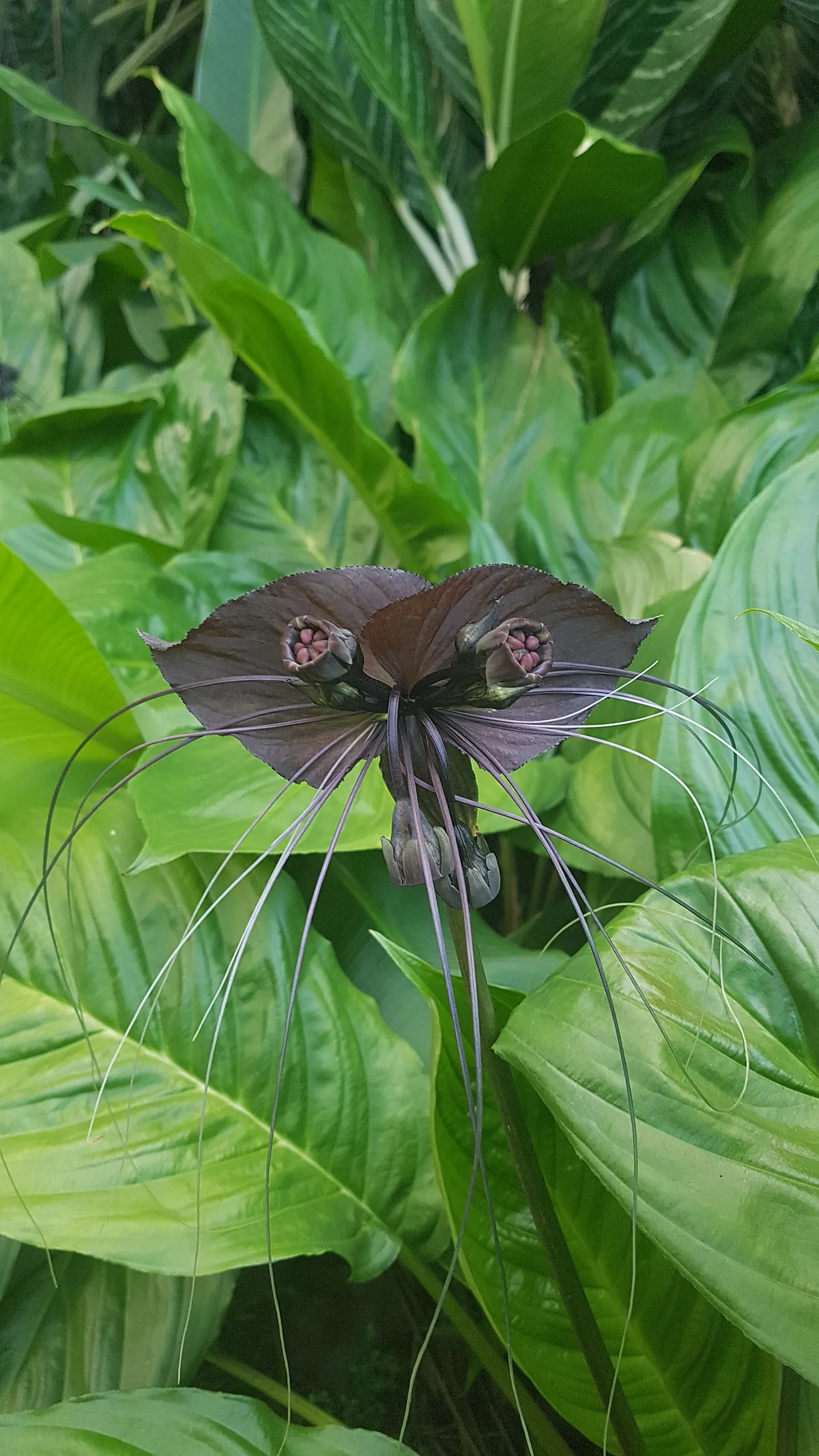
タシロイモ(Tacca chantrieri、通称ブラックキャット/黒バットフラワー)の花。黒褐色の翼状の苞葉と、そこから伸びる糸状の長いひげが写っている。
写っているもの: Tacca chantrieri部位・状態: 開花した花序全体(苞葉・小花・長いひげ状の付属体)
写真: Cameroncomix/ CC BY-SA 4.0/ 原画像/ 台帳の原画像
写真の範囲と来歴
被写体の確認: 原典の記載による同定。原典に生育地の詳細記載なし(栽培個体の可能性あり)。専門家による再同定は行っていない。
掲載画像: Wikimedia Commons の1920px版。苦味研究所では切り抜き・色調変更なし。 表示用には幅1200px上限のWebPを配信し、台帳の原画像は上のリンクから確認できます。
On this page (8 sections)
Reading the bitterness
For Tacca chantrieri (also called tashiro-imo, or black cat), a government knowledge page compiling plant knowledge from the northern Thai highlands records that the flowers and young leaves are roasted over fire or blanched for eating, and the roots are decocted as a tonic. The page describes no taste and is not an ethnographic survey, so when, by whom, and in what circumstances the plant is eaten remain unknown.
The same page lists ดีงูหล้า and ดีงูหว้า as northern Thai names for this plant, alongside other names from central and southern Thailand. However, this is only a name match: the page alone has not confirmed whether it is the plant called ดีงูหว้า among the herbs in Lisu Tom Khom. Because the same vernacular name may refer to different plants across regions or communities, the correspondence between name and species remains partly unconfirmed.
Sources for this overview
ดีงูหล้า (องค์ความรู้เพื่อการพัฒนาพื้นที่สูงอย่างยั่งยืน)
Checked for this overview: Checked the description of how the flowers and young leaves are eaten and how the roots are used. / Checked the listing of northern Thai names and the limits of certainty in the name-to-species correspondence.
Other names: เนระพูสีไทย (th), nera phu si thai (th-Latn), ค้างคาวดำ (th, identification medium), มังกรดำ (th, identification medium)
Follow the connections
dee ngu wa →The name is a candidate fo…→ Tacca chantrieri
Structured claims — open a section to read each claim's confidence, evidence and limits
Composition and content (3)
Scope: Name-level match only: the HRDI knowledge page lists ดีงูหว้า as a northern Thai variant name for ดีงูหล้า = Tacca chantrieri.
Note: Do not treat this as an identification. The HRDI page covers Thailand generally and gives no Lisu-language name, so the herb called ดีงูหว้า in a Lisu Tom Khom preparation could refer to a different plant. The identification rules and local-confirmation task are recorded in tomkhom-research-dossier.md.
Show data
organism-dee-ngu-wa —is_name_candidate_for→ organism-tacca-chantrieriScope: Central and southern Thailand.
Show data
organism-tacca-chantrieri —is_listed_as→ "Central Thai names: ว่านหัวฬา, ดีงูหว้า, ดีปลาช่อน, นิลพูสี, เนระพูสีไทย, ค้างคาวดำ; southern Thai names: มังกรดำ, ม้าถอนหลัก, ว่านพังพอน."Scope: Name-level match only, per TH-BIF (ONEP) species database record
Show data
organism-dee-ngu-wa —is_name_candidate_for→ organism-tacca-chantrieriHow processing and cooking change it (1)
Scope: Thailand; according to a knowledge page from the public agency HRDI that lists local names from northern, central, and southern Thailand.
Note: This is a government knowledge-base record rather than an ethnographic survey, and the page contains no description of taste. Information about Tacca bitterness (taccalonolides, Chen 1988) is bibliographic only and is intentionally not asserted here.
Show data
organism-tacca-chantrieri —is_eaten_as→ "Flowers and young leaves are roasted over fire or blanched. Roots are decocted as a tonic."