Ixeris dentata
organism / organism-ixeris-dentata
ニガナ
Nigana (Korean name 씀바귀, ssumbagwi), a daisy-family plant eaten in Asia. Synonym: Ixeridium dentatum.
Photographs (captions in Japanese)
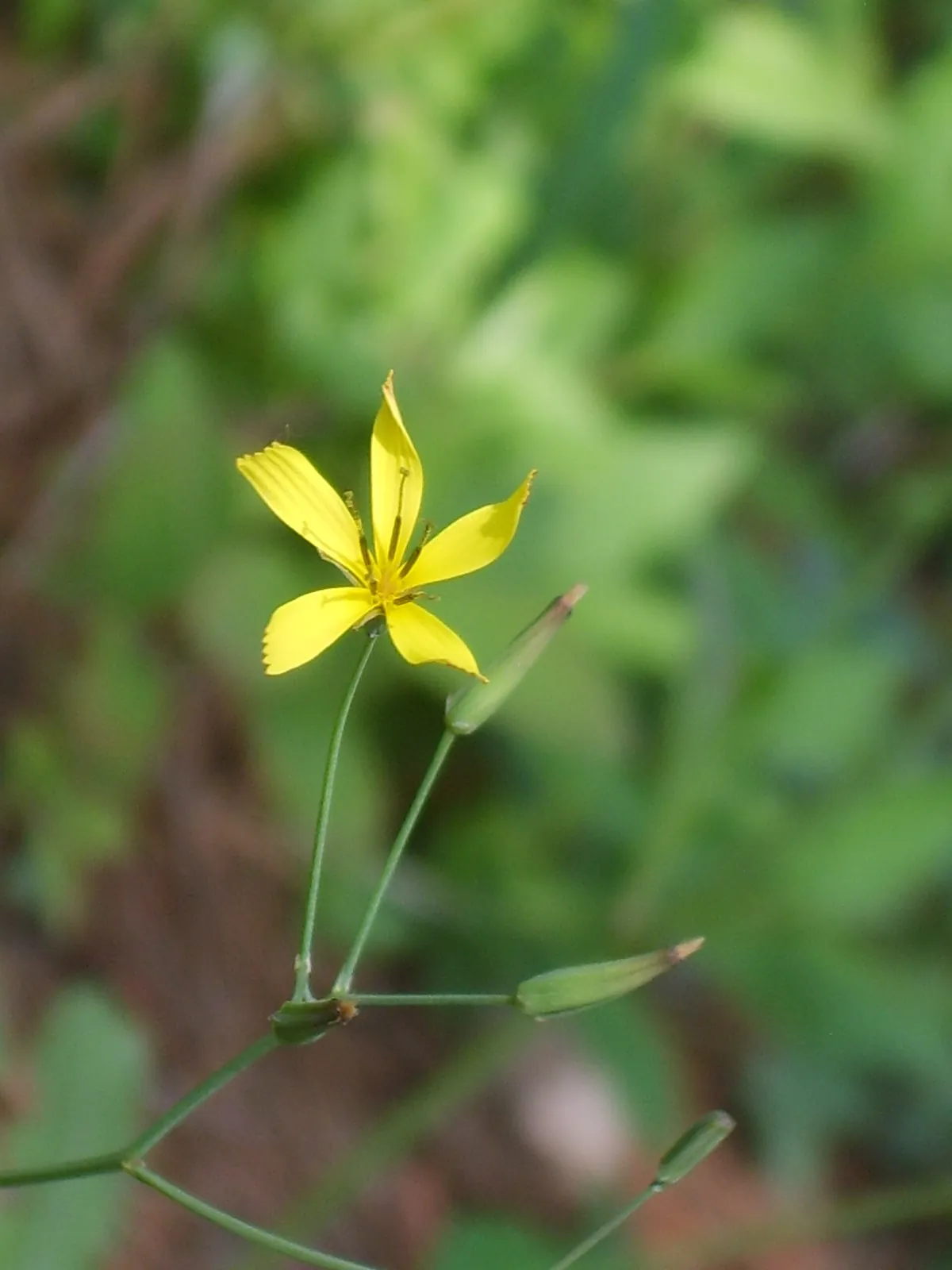
ニガナ(Ixeris dentata)の花。細い花柄の先に咲く黄色い一輪の頭花と、隣接するつぼみが写っている。
写っているもの: Ixeris dentata (Thunb. ex Thunb.) Nakai部位・状態: 開花した一輪の頭花(舌状花)とつぼみ
写真: Dalgial/ CC BY-SA 3.0/ 原画像/ 台帳の原画像
写真の範囲と来歴
被写体の確認: 原典の記載による同定。原典は韓国・仁川で撮影された個体として記載。専門家による再同定は行っていない。
掲載画像: Wikimedia Commons の1920px版。苦味研究所では切り抜き・色調変更なし。 表示用には幅1200px上限のWebPを配信し、台帳の原画像は上のリンクから確認できます。
On this page (9 sections)
Reading the bitterness
Nigana (Ixeris dentata; Korean name 씀바귀, ssumbagwi) is a daisy-family plant described as a well-known edible vegetable in Asia. An encyclopedia entry from the Academy of Korean Studies introduces it as one of the representative spring namul whose roots and young leaves are gathered and eaten in early spring.
A study analyzing the roots identified 7 sesquiterpene lactone glucosides belonging to the guaianolide and germacranolide groups (classes of plant constituents often associated with bitterness) by HPLC-MS/MS. These are in the same class of compounds as lactucins in chicory. Their content was reported to vary significantly by place of origin within Korea, but the study did not examine a relationship with perceived bitterness.
Sources for this overview
Checked for this overview: Checked its description as an edible vegetable in Asia. / Checked the 7 root sesquiterpene lactone glucosides and variation among places of origin.
Checked for this overview: Checked the account of eating its roots and young leaves as spring namul in early spring.
Other names: 씀바귀 (ko), Ixeris dentata (Thunb. ex Thunb.) Nakai (la), Ixeridium dentatum (Thunb.) Tzvelev (la)
Follow the connections
ssumbagwi greens →is used as→ Ixeris dentata
Structured claims — open a section to read each claim's confidence, evidence and limits
Composition and content (1)
Scope: Roots from 6 regions of Korea.
Note: In the same sesquiterpene lactone class as the lactucin compounds in chicory. A contribution to bitterness was not tested in this source.
Show data
organism-ixeris-dentata —contains→ "The roots contain 7 sesquiterpene lactone glucosides (guaianolides and germacranolides). Their content varies significantly among places of origin within Korea."How processing and cooking change it (1)
Scope: Asia (the analyzed samples were roots from 6 regions of Korea).
Show data
organism-ixeris-dentata —is_eaten_as→ "A well-known edible vegetable in Asia."Culture (1)
Scope: Spring namul in Korea, where roots and young leaves are eaten in early spring
Note: Connected to the public encyclopedia of the Academy of Korean Studies.
Show data
ingredient-ssumbagwi-greens —is_used_as→ organism-ixeris-dentata