warabi (bracken)
ingredient / ingredient-warabi
わらび
Warabi (bracken) is a food ingredient treated in Yamagata Prefecture’s official local-cuisine records as a sansai eaten after aku removal.
Photographs (captions in Japanese)
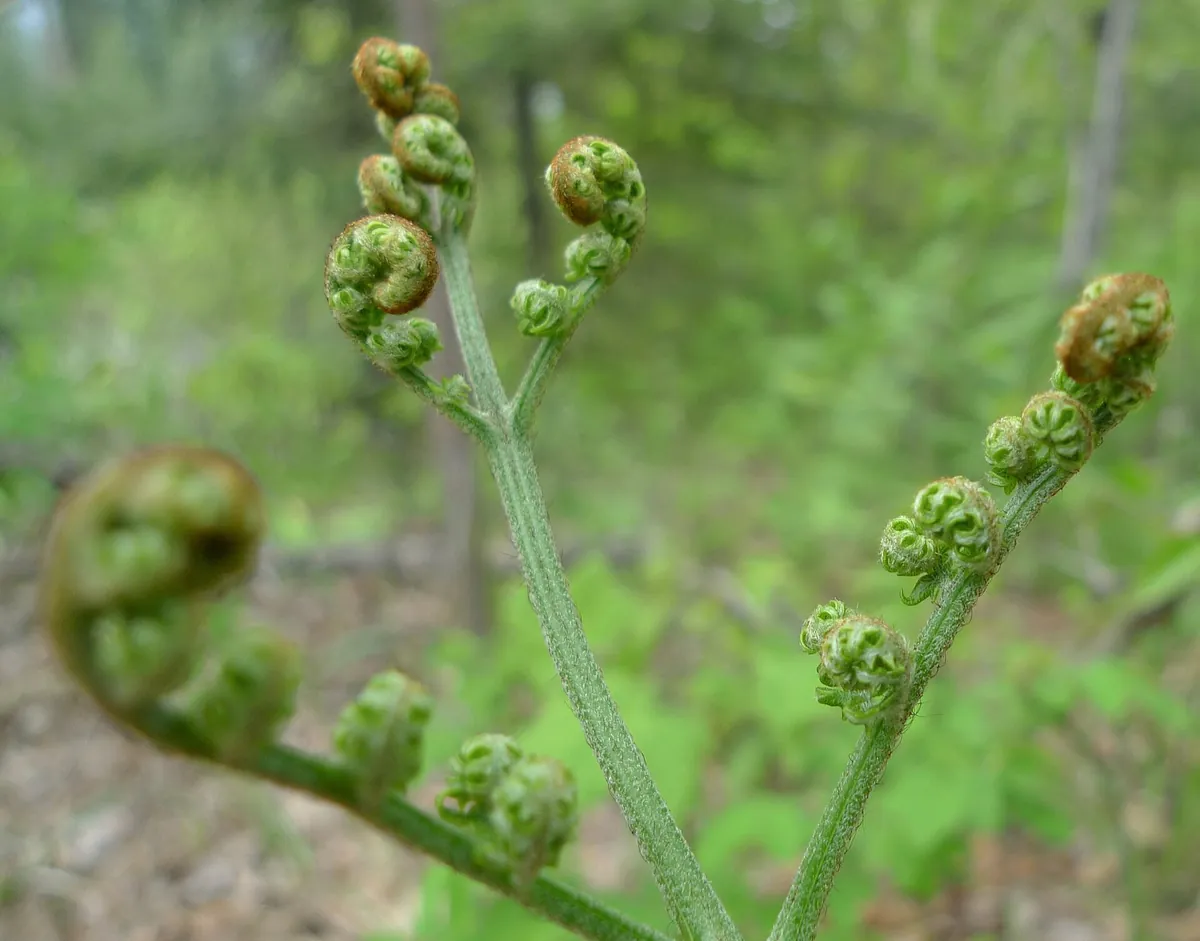
春に展開しはじめる Pteridium aquilinum(ワラビ)の渦巻き状の若芽。ただしこの個体は北米産の変種 var. pubescens で、日本で食べられるワラビ(var. latiusculum)とは変種が異なる。同種の若芽の姿を示す一例として見る必要がある。
写っているもの: Pteridium aquilinum var. pubescens部位・状態: 地面から伸びたばかりで、まだ渦巻き状に巻いた若い芽(フィドルヘッド)の状態。展開前の若芽が数本、茎から分かれて伸びている
写真: Thayne Tuason/ CC BY-SA 4.0/ 原画像/ 台帳の原画像
写真の範囲と来歴
被写体の確認: 原典の記載による同定。原典ページは学術種名を Pteridium aquilinum var. pubescens(北米ワシントン州の個体)と明記しており、日本産ワラビの通例の分類群(var. latiusculum)とは変種が異なる。同一種の若芽の形態を示す参考写真として扱い、専門家による再同定は行っていない。
掲載画像: Wikimedia Commons の1920px版。苦味研究所では切り抜き・色調変更なし。 表示用には幅1200px上限のWebPを配信し、台帳の原画像は上のリンクから確認できます。
On this page (7 sections)
Reading the bitterness
Warabi is treated in records of Yamagata local cuisine as a sansai eaten after aku removal. The same records state that warabi is generally used in tataki, ohitashi, simmered dishes, miso soup, and other preparations after aku removal. However, this is a recorded cooking practice, and the records do not show how much any particular compound or bitterness is reduced by aku removal.
Warabi tataki, recorded as one specific dish, is introduced in northern Yamagata as a taste of spring combining warabi with miso and Japanese pepper leaves. However, this is one example in the record and does not cover regional or household differences. The record alone does not show what aku removal changes, or how, including with respect to bitterness.
「煮あえっこ」 (niaekko), from the Shimokita region of Aomori Prefecture, is recorded as a dish that keeps warabi from being an ingredient used only in spring. Warabi and zenmai picked in season were preserved by salting or drying, and used in home cooking from autumn to winter, in ceremonial occasions, and in the vegetarian dishes of Koshōgatsu (Little New Year). In modern times, the record notes, they are often boiled and frozen after harvesting. This is a record of how the handling of the same preserved food has changed over time.
The published niaekko recipe uses 180 g of warabi for a batch of 10 servings eaten over 2 to 3 days from a large pot. The ingredients are cut into thin strips, tofu, carrot, and burdock are stir-fried, then warabi and fried tofu are added, and daikon and seasoning are put in and brought to a boil. Salted warabi is rehydrated in water over time before cooking. This is one recipe record from the Shimokita region, and there are also regional and household differences.
Sources for this overview
Checked for this overview: Confirmed the cooking practice of using it after aku removal and that the reduction rate is unknown. / Confirmed the description of the ingredient composition of warabi tataki.
Checked for this overview: Used to describe the Shimokita region's preservation method, the season it is eaten, and modern frozen storage / Used to describe the 10 servings, 2 to 3 days, 180 g of warabi, and the ingredients and steps / Connects the description of rehydrating salted warabi in water over time with the regional limitation
Follow the connections
warabi (bracken) →is prepared through→ aku-nuki (blanch-and-soak treatment)
warabi tataki (pounded bracken) →includes→ warabi (bracken)
sansai tempura →includes→ warabi (bracken)
Hypotheses and recipe candidates for this entry are on the Japanese page.
Structured claims — open a section to read each claim's confidence, evidence and limits
How processing and cooking change it (3)
Scope: A public local-cuisine record on warabi from Yamagata Prefecture
Note: A recorded cooking practice; it does not give a reduction rate for any specific compound or for bitterness from aku removal.
Show data
ingredient-warabi —is_prepared_with→ process-aku-nukiScope: A candidate structural component of a dish. Regional variation in ingredients is unconfirmed
Note: Source not connected. Does not indicate quantities or cooking conditions.
No source connected — this claim has not been verified yet. It is a general-knowledge placeholder, not a confirmed statement.
Show data
dish-sansai-tempura —includes→ ingredient-warabiScope: 1 niaekko recipe, referencing the 「食の文化伝承ガイドブック(青森県)」 (in translation: "Food Culture Heritage Guidebook (Aomori Prefecture)"), published on a Ministry of Agriculture, Forestry and Fisheries page
Note: One example, which the page notes has regional and household differences. The 10 servings are treated as the amount eaten over 2 to 3 days from a large pot. This is not a source that measured flavor or bitterness.
Show data
ingredient-warabi —is_used_in→ "In the 10-serving niaekko recipe, 180 g of warabi is cut into thin strips and, following tofu, carrot, and burdock, stir-fried together with fried tofu; daikon is added, the dish is seasoned, and it is brought to a boil"Culture (2)
Scope: Local-cuisine records from northern Yamagata Prefecture
Note: The records describe it as a taste of spring combining miso and Japanese pepper leaves.
Show data
dish-warabi-tataki —includes→ ingredient-warabiScope: A record of food customs concerning niaekko in the Ministry of Agriculture, Forestry and Fisheries' 「うちの郷土料理」 (in translation: "Our Local Cuisine")
Note: A record of one dish from the Shimokita region of Aomori Prefecture. This is a description that lists warabi and zenmai together, not a survey showing the frequency of each preservation method or the proportions across the whole region.
Show data
ingredient-warabi —is_preserved_by→ "In niaekko from the Shimokita region of Aomori Prefecture, warabi and zenmai picked in season are recorded as being preserved by salting or drying, and in modern times are often boiled and frozen after harvesting"