zenmai (Osmunda japonica)
ingredient / ingredient-zenmai
ぜんまい
Zenmai (Osmunda japonica) is an ingredient treated in a public local-cuisine record from Kochi Prefecture as a sansai that is boiled, dried, and stored.
Photographs (captions in Japanese)
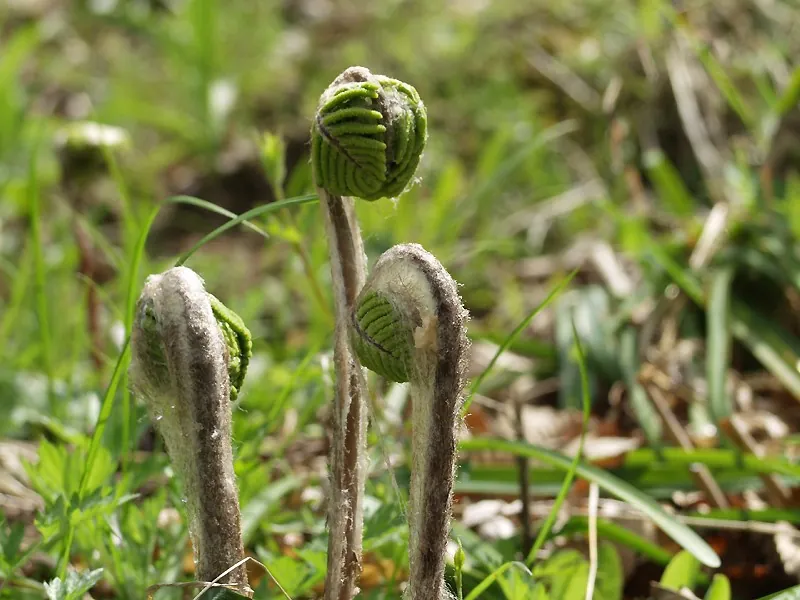
渦巻き状に丸まった若芽(フィドルヘッド)がはっきり視認できるぜんまいの写真。ファイルページには「ゼンマイ 撮影場所:広見町」と記載される。
写っているもの: Osmunda japonica(ファイルページ記載)部位・状態: 若芽(渦巻き状のこぶし)
写真: "Uncle Carl"(カールおじさん / Kusabana Photo Studio)/ CC BY-SA 3.0/ 原画像/ 台帳の原画像
写真の範囲と来歴
被写体の確認: 原典の記載による同定。候補2件のうち、渦巻き(フィドルヘッド)がより明瞭に視認できるこちらを採用。
掲載画像: リサイズ・トリミング・色調変更なし。Wikimedia Commons のオリジナル画像をそのまま使用。 表示用には幅1200px上限のWebPを配信し、台帳の原画像は上のリンクから確認できます。
On this page (7 sections)
Reading the bitterness
Zenmai is introduced in local-cuisine records from mountain villages including Otoyo Town, Kochi Prefecture, as an ingredient that can be stored for a long time by boiling and drying it. While the record describes it as having been an important food for mountain villages, it does not provide numerical details such as drying conditions or storage duration.
The same record states that oil-fried zenmai, shira-ae, and simmered dishes have long been eaten in mountain villages, and introduces 「ぜんまいの炒め煮」 (in translation: "simmered stir-fried zenmai") as an individual dish among them. It is not a historical source demonstrating an origin in a particular period, and needs to be treated as a record of ways of eating in mountain villages.
In a Niigata Prefecture cooking record, dried zenmai is made by removing the down, boiling it, and rubbing it by hand. The rubbing is repeated dozens of times over 2 to 3 days, and the article explains that this breaks the fibers and softens the zenmai. It is a record that conveys how, inside the single word "drying," there is a process of moving one's hands many times over several days.
A Niigata Prefecture recipe for simmered zenmai uses 100 g of dried zenmai for 4 servings, giving the rehydrated weight as 350 g. It is simmered over medium heat for about 1 minute, transferred to water, and the water is changed about 3 times over half a day. After that, it is simmered for 2 to 3 minutes with sugar and sake, then for about 5 minutes with salt, soy sauce, and mirin, and the heat is turned off to let the flavor soak in. Among the rehydration methods that differ by region and household, this is one example recorded on an official page.
Sources for this overview
Checked for this overview: Confirmed the statement that boiling and drying allow long-term storage. / Confirmed records of ways of eating in mountain villages and of simmered stir-fried zenmai.
Checked for this overview: Used to describe the removal of the down, boiling, the 2- to 3-day, dozens-of-times rubbing, and the article's explanation of the resulting softness / Used to describe the 4 servings, the dry and rehydrated weight, each duration, the number of water changes, the simmering steps, and the regional and household differences
Follow the connections
simmered stir-fried zenmai (zenmai no itameni) →includes→ zenmai (Osmunda japonica)
Hypotheses and recipe candidates for this entry are on the Japanese page.
Structured claims — open a section to read each claim's confidence, evidence and limits
How processing and cooking change it (3)
Scope: A local-cuisine record from mountain villages including Otoyo, Kochi Prefecture
Note: A description of a preserved food in a public record. There is no quantified value for drying conditions or storage duration.
Show data
ingredient-zenmai —is_preserved_by→ "Boiling and drying it allows for long-term storage"Scope: Dried zenmai preparation recorded in the Ministry of Agriculture, Forestry and Fisheries' 「ぜんまいの煮物 新潟県」 (in translation: "Simmered zenmai, Niigata Prefecture")
Note: One public cooking record from Niigata Prefecture. The article explains that rubbing breaks the fibers and softens the zenmai, but this is not an instrumental measurement of hardness.
Show data
ingredient-zenmai —is_processed_by→ "In a Niigata Prefecture cooking record, dried zenmai is made by removing the down, boiling it, and rubbing it by hand dozens of times over 2 to 3 days"Scope: 1 simmered zenmai recipe from the Niigata Prefecture Council of Dietary Improvement Promotion Committees, published on a Ministry of Agriculture, Forestry and Fisheries page
Note: The page notes regional and household differences. This is one rehydration method for the dried product and its simmering process, not an experiment that measured the amount of bitterness or aku.
Show data
ingredient-zenmai —is_documented_as_having→ "In the Niigata Prefecture recipe for simmered zenmai serving 4, 100 g of dried zenmai is rehydrated to 350 g, simmered over medium heat for about 1 minute, then left in water for half a day with the water changed about 3 times, and seasoned to finish"Culture (1)
Scope: A local-cuisine record from mountain villages in Kochi Prefecture.
Note: Among records saying that oil-fried zenmai, shira-ae, and simmered dishes have long been eaten in mountain villages, it records the simmered stir-fry as an individual dish.
Show data
dish-zenmai-itameni —includes→ ingredient-zenmai