NIGAMI LAB 図鑑 苦味単位(BU/IBU) English
概念
苦味単位(BU/IBU) bitterness units (BU / IBU)
苦味単位(BU/IBU)は、275 nm で吸光するイソオクタン抽出物の分光光度測定値。ビール苦味の代用指標として慣用される。
模式図 — 写真ではなく、根拠をもとに苦味研究所が組んだ説明図
模式図(苦味研究所作成)· CC BY 4.0
ビールの苦味単位(BU/IBU)は、何を測っているのか
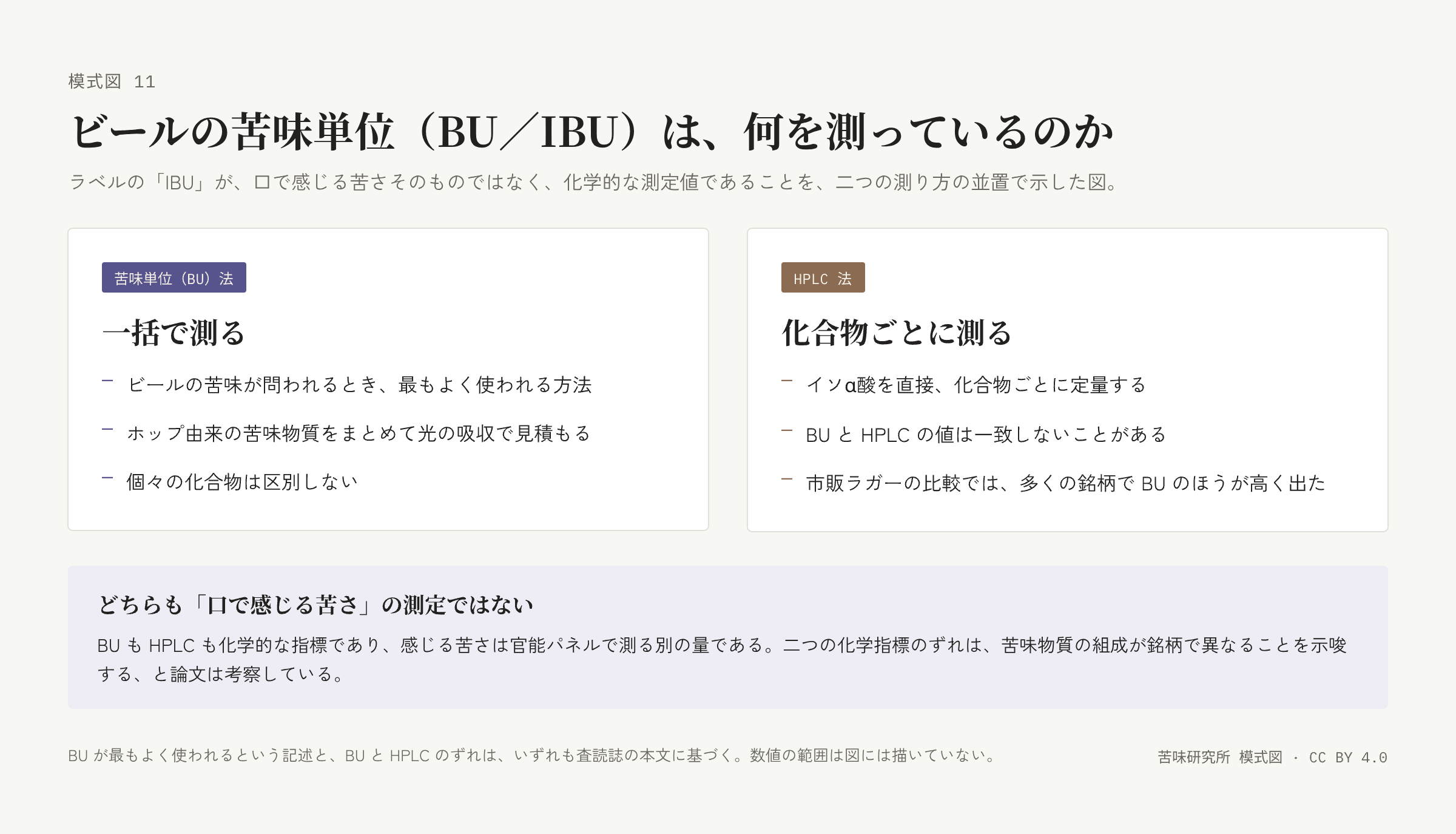
苦味単位(BU)法がホップ由来の苦味物質をまとめて光の吸収で見積もる方法であること、HPLC 法がイソα酸を化合物ごとに定量する方法であること、市販ラガーの比較で多くの銘柄において BU のほうが高く出たことを並べ、どちらも口で感じる苦さの測定ではないことを帯に記した図。
根拠: ev-ibu-mismatch-rutnik · ev-w35-ibu-oladokun-4th
説明を読む ↓ あとで読むに保存
概念 / concept-bitterness-units
このページの内容(8 節) 説明 この説明の根拠(5) 主題ハブ 関連をたどる 関連項目(10) 組成・含有(9) 感覚(1) 加工・調理でどう変わる(2) このページの内容
説明 この説明の根拠(5) 主題ハブ 関連をたどる 関連項目(10) 組成・含有(9) 感覚(1) 加工・調理でどう変わる(2) ↑ 上へ戻る
↑ 苦味を読む
苦味 単位(BU、あるいは国際苦味単位IBU)は、ビールを275ナノメートルの波長で分光測定した吸光度をもとに、苦味の目安として慣用的に使われてきた数値である。ホップ由来のイソα酸の濃度を映す代用指標として扱われることが多いが、ドライホップしたビールを調べた調査では、この数値がイソα酸の濃度をそのまま追いかけているとは限らないことが分かっている。調べた市販ビール15銘柄の過半数で、ドライホッピングの後にIBUは上がったにもかかわらず、含まれるイソα酸の総濃度はむしろ下がっていたという。
IBUが上がるにもかかわらずイソα酸が減る背景として、ドライホップの工程でフムリノンや、場合によってはポリフェノール が新たに抽出されることが挙げられている。BUの値は275ナノメートルでの吸光度そのものであるため、これらの化合物が測定値を押し上げている可能性は考えられるが、文献がこの吸光の重なりを直接示したわけではない。クラクフ農科大学の総説は、複数の研究室の報告を通じて、ドライホップの過程でイソα酸が減る一方、α酸やフムリノン、ポリフェノールが増えることは文献でよく確認されていると述べ、フムリノンを知覚される苦味の増加の主な要因の一つとし、その相対的な苦味の強さをイソα酸のおよそ66%(±13%)としている。
BUの値そのものが、飲んだときに感じる苦味の強さと必ずしも対応しないことも指摘されている。スロベニア産ホップ3品種を使ったドライホップ試験では、BUの値はホップの貯蔵劣化を示す指標が上がるにつれて上昇したあと下降したのに対し、パネルが評価した苦味の質はホップが新鮮な段階で最も高く、その後は下がり続けたという。ただしこの乖離は論文が統計的な相関として示したものではなく、別々に報告された測定値の表を並べて読むことで見えてくる関係であり、BUの値はイソα酸ではなくフムリノンの量と対応していたとも記されている。近年の分析では、強くドライホップしたビールに含まれるホップ由来のフェノール類が、同じビール中のフムリノンやイソα酸に匹敵するかそれを上回る濃度に達しており、著者らは苦味や口当たりへの寄与がこれまで考えられていたより大きい可能性を挙げている。BUという一つの数値だけで、ビールの苦味の性質を語ることはできない。
ただし、イソアルファ酸の側にも一様でない性質がある。マウスフィールに関する2025年の総説は、イソアルファ酸のうちcis型の方がtrans型より苦味が強いと記しており、同じIBU値でも異性体の比率によって感じ方が変わりうることを示唆する。この記述は総説が先行研究を引用してまとめたものである。
主題ハブ — この項目が属するテーマをまとめて読む
ビールの苦味とIBU → IBUが何を測り、何を測らないか
主題ハブは、図鑑の主張データを一つの問いで束ねた読み物です。項目からハブへ、ハブから隣の項目へ渡れます。
関連をたどる
ドライホッピング →増加させる→ 苦味単位(BU/IBU)
セゾン →次を用いると記録されている→ 苦味単位(BU/IBU)
ケルシュ →次を用いると記録されている→ 苦味単位(BU/IBU)
構造化された主張 — 節を開くと、主張ごとの確度・根拠・限界が読めます
組成・含有(9) 苦味単位(BU/IBU) は国際苦味単位(IBU)は、ホップ由来のアルファ酸が醸造中に転化したイソアルファ酸の水準を定量する指標として位置づけられ、イソアルファ酸水準はビールの苦味と密接に相関するとされる。イソアルファ酸のうちcis型はtrans型よりも苦味が強いとされる。 と定義される予備的
範囲: 層: 文献。2025年の総説(マウスフィールに関する包括的レビュー)がビール苦味の背景として述べた記述。
注記: cis/trans異性体の苦味差およびIBUとイソアルファ酸の相関は、総説がBossaert et al. 2022・Yan et al. 2024・Luo et al. 2020を引用して述べたもの(いずれも原著未読、孫引き)。
"The cis form of iso-alpha acids is more bitter than the trans form... it is worth mentioning the level of iso-alpha acids closely correlates with the bitterness of beer and is quantified using the International Bitterness Units (IBUs)."
限界: 引用元の原著論文(Bossaert 2022、Yan 2024、Luo 2020)は本班では未確認。総説の要約記述に依拠。
データを表示 concept-bitterness-units —is_defined_as→ "国際苦味単位(IBU)は、ホップ由来のアルファ酸が醸造中に転化したイソアルファ酸の水準を定量する指標として位置づけられ、イソアルファ酸水準はビールの苦味と密接に相関するとされる。イソアルファ酸のうちcis型はtrans型よりも苦味が強いとされる。"claim: clm-w71d1-ibu-quantifies-iso-alpha-acids-cis-trans / type: composition / 更新: 2026-09-07
セゾン は次を用いると記録されている: 苦味単位(BU/IBU) 支持あり 範囲: BJCP 2021 25Bの審査用途に限定。市販品全体の測定結果ではない。 IBUの目安は20–35。
IBUの目安は20–35
限界: IBUはこの項目ではガイド上の目安。実測の知覚強度や厳格な合否境界ではない。
限定: 数値・記述は柔軟に用いる審査の目安で、厳格な仕様ではない。
限界: ガイド自体の使用目的を説明する資料。
データを表示 concept-saison-style —is_documented_using→ concept-bitterness-unitsclaim: cl-terms-saison-style-ibu / type: taxonomy / 更新: 2026-09-10
ケルシュ は次を用いると記録されている: 苦味単位(BU/IBU) 支持あり 範囲: BJCP 2021 5Bの審査用途に限定。市販品全体の測定結果ではない。 IBUの目安は18–30。
IBUの目安は18–30
限界: IBUはこの項目ではガイド上の目安。実測の知覚強度や厳格な合否境界ではない。
限定: 数値・記述は柔軟に用いる審査の目安で、厳格な仕様ではない。
限界: ガイド自体の使用目的を説明する資料。
データを表示 concept-kolsch-style —is_documented_using→ concept-bitterness-unitsclaim: cl-terms-kolsch-style-ibu / type: taxonomy / 更新: 2026-09-10
アルトビール は次を用いると記録されている: 苦味単位(BU/IBU) 支持あり 範囲: BJCP 2021 7Bの審査用途に限定。市販品全体の測定結果ではない。 IBUの目安は25–50。
IBUの目安は25–50
限界: IBUはこの項目ではガイド上の目安。実測の知覚強度や厳格な合否境界ではない。
限定: 数値・記述は柔軟に用いる審査の目安で、厳格な仕様ではない。
限界: ガイド自体の使用目的を説明する資料。
データを表示 concept-altbier-style —is_documented_using→ concept-bitterness-unitsclaim: cl-terms-altbier-style-ibu / type: taxonomy / 更新: 2026-09-10
ヴァイツェン は次を用いると記録されている: 苦味単位(BU/IBU) 支持あり 範囲: BJCP 2021 10Aの審査用途に限定。市販品全体の測定結果ではない。 IBUの目安は8–15。
IBUの目安は8–15
限界: IBUはこの項目ではガイド上の目安。実測の知覚強度や厳格な合否境界ではない。
限定: 数値・記述は柔軟に用いる審査の目安で、厳格な仕様ではない。
限界: ガイド自体の使用目的を説明する資料。
データを表示 concept-weissbier-style —is_documented_using→ concept-bitterness-unitsclaim: cl-terms-weissbier-style-ibu / type: taxonomy / 更新: 2026-09-10
ヴィットビア は次を用いると記録されている: 苦味単位(BU/IBU) 支持あり 範囲: BJCP 2021 24Aの審査用途に限定。市販品全体の測定結果ではない。 IBUの目安は8–20。
IBUの目安は8–20
限界: IBUはこの項目ではガイド上の目安。実測の知覚強度や厳格な合否境界ではない。
限定: 数値・記述は柔軟に用いる審査の目安で、厳格な仕様ではない。
限界: ガイド自体の使用目的を説明する資料。
データを表示 concept-witbier-style —is_documented_using→ concept-bitterness-unitsclaim: cl-terms-witbier-style-ibu / type: taxonomy / 更新: 2026-09-10
ランビック は次を用いると記録されている: 苦味単位(BU/IBU) 支持あり 範囲: BJCP 2021 23Dの審査用途に限定。市販品全体の測定結果ではない。 IBUの目安は0–10。
IBUの目安は0–10
限界: IBUはこの項目ではガイド上の目安。実測の知覚強度や厳格な合否境界ではない。
限定: 数値・記述は柔軟に用いる審査の目安で、厳格な仕様ではない。
限界: ガイド自体の使用目的を説明する資料。
データを表示 concept-lambic-style —is_documented_using→ concept-bitterness-unitsclaim: cl-terms-lambic-style-ibu / type: taxonomy / 更新: 2026-09-10
フルーツビール は次を用いると記録されている: 苦味単位(BU/IBU) 支持あり 範囲: BJCP 2021 29Aの審査用途に限定。市販品全体の測定結果ではない。 IBUなどの数値はベースビールに応じて変わり、共通範囲を設けない。
IBUなどの数値はベースビールに応じて変わり、共通範囲を設けない
限界: IBUはこの項目ではガイド上の目安。実測の知覚強度や厳格な合否境界ではない。
限定: 数値・記述は柔軟に用いる審査の目安で、厳格な仕様ではない。
限界: ガイド自体の使用目的を説明する資料。
データを表示 concept-fruit-beer-style —is_documented_using→ concept-bitterness-unitsclaim: cl-terms-fruit-beer-style-ibu / type: taxonomy / 更新: 2026-09-10
スモークビール は次を用いると記録されている: 苦味単位(BU/IBU) 支持あり 範囲: BJCP 2021 32A;32Bの審査用途に限定。市販品全体の測定結果ではない。 IBUなどの数値はベースビールに応じて変わり、共通範囲を設けない。
IBUなどの数値はベースビールに応じて変わり、共通範囲を設けない
限界: IBUはこの項目ではガイド上の目安。実測の知覚強度や厳格な合否境界ではない。
限定: 数値・記述は柔軟に用いる審査の目安で、厳格な仕様ではない。
限界: ガイド自体の使用目的を説明する資料。
データを表示 concept-smoked-beer-style —is_documented_using→ concept-bitterness-unitsclaim: cl-terms-smoked-beer-style-ibu / type: taxonomy / 更新: 2026-09-10
感覚(1) 苦味単位(BU/IBU) はドライホップビールにおける知覚苦味強度またはイソα酸濃度 を確実には反映しない支持あり
範囲: ドライホップおよび高ホップビール。独立3研究におけるパイロット規模および市販品調査
調査した市販ビールの過半数で、ドライホッピングによりIBUは上昇した一方、総イソα酸濃度は低下した。すなわち測定されたIBUの変化は、IBUが慣習的に測っているとされる化合物クラスを追跡していなかった。
限界: 抄録レベルの抽出; 抄録はIBU上昇やイソα酸低下の大きさ、15銘柄中いくつが低下を示したかを示していない。
論文はビール苦味の考察で 'The BU method is most frequently used when the bitterness of beer is in question. However, BU values do not always correlate with the actual perceived bitterness'、また 'The BUs were correlated with the levels of humulinones' と述べる。データでは、測定 BU は HSI とともに上昇後下降し(HSI 0.3-0.7 で Aurora 22, 29, 39, 35, 34 BU、Styrian Wolf 21, 25, 45, 42, 35 BU)、一方パネル評定の苦味の質は HSI 0.3 で最高(1-5尺度で Celeia 4.9 +/- 0.21、Aurora 4.9 +/- 0.21、Styrian Wolf 5.0 +/- 0.16)となりその後低下した。Celeia ではイソα酸が HSI 0.3 の 0.64 +/- 0.05 mg/L から HSI 0.6・0.7 で検出限界未満に低下する間、BU は 21-28 の範囲にとどまった。
限界: 苦味の質と BU は別々の尺度であり、読んだ本文中で相互に統計的に相関づけられてはいない。乖離は2つの表を並べて読んだことからの推論であり、論文自身が相関結果として述べたものではない。評価者10名、セルあたり醸造試行1回。これらのビールのイソα酸濃度は絶対値として非常に低く、ドライホップのみのビタリングと整合するため、ケトルホップのビールと直接比較すべきでない。
強度にドライホップしたスタイルは最大 159 mg/L と最高濃度のホップフェノールを含み、同じビール中のフムリノンやイソα酸に匹敵するか上回った。著者らは、フムリノンがヘイジースタイルのソフトな苦味への既知の寄与成分である一方、ホップフェノールの役割は依然よく理解されていないと述べ、現代のドライホップビールの苦味とマウスフィールにおいてホップフェノールが従来考えられていたより大きな役割を果たしている可能性があると結論づけている。
限界: 抄録レベルの抽出であり組成研究である。抄録に官能パネルの結果は報告されておらず、苦味とマウスフィールへの示唆は測定された知覚結果ではなく著者らの提案である。ビールの本数は抄録に記載されていない。
34銘柄の商業ラガーでBU法とHPLC法(iso-α-acids直接定量)を並行測定したところ、BUはHPLCより高値になる傾向が60%の試料で見られた(BU 8-36 mg/L 対 HPLC合計 8-41 mg/L)。さらに、化学的プロファイルが異なる10銘柄をCATA官能評価したところ、13語のうち9語(harsh, progressive, sharp, instant, diminishing, rounded, acidic, metallic, vegetative等)が銘柄間で有意に異なり(p<0.05)、BU値だけでは説明できない知覚的な「質」の違いがホップ製品の種類(従来型ホッピング/ドライホップ/テトラヒドロ化製品)で系統的に分かれた。既存claimの3系統(Parkin/Rutnik/Calvert)とは独立の第4のデータセットとして、BU-HPLC不一致とBU非依存の知覚質差を同一データセットで示す。
限界: BUの「過大評価」は約60%の試料でのみ観察され、残りは同程度または逆にBUがHPLCを下回った(例: 銘柄AAはBU34 mg/LだがHPLC41 mg/L)。官能側は絶対強度ではなくCATAによる質的記述(頻度データ)であり、強度スケールでの相関係数は報告されていない。
データを表示 concept-bitterness-units —does_not_reliably_track→ "ドライホップビールにおける知覚苦味強度またはイソα酸濃度"claim: clm-ibu-not-tracking-perceived-bitterness / type: sensory / 更新: 2026-08-30
加工・調理でどう変わる(2) 範囲: 無ホップエールへのパイロット規模ドライホッピング(0-16 g/L、0-72 h)と、ドライホップ前後にサンプリングした太平洋岸北西部の市販ビール15銘柄の調査
注記: 2つの半面が逆方向に動く: 慣用の IBU 代用指標は上がるのに、それが代理するはずの化合物クラスは下がる。IBU をイソα酸の読み値として扱うことへの中心的な反証材料。
訓練された官能パネルが、ホップ無添加エールを 0-16 g/L・0-72 h でドライホップした際の苦味増加を、IBU およびホップ酸・ポリフェノール測定と併せて定量した。ドライホップによるビール苦味(IBU)の増加はフムリノンの抽出に、一部の場合はポリフェノールの抽出に帰せられた。ドライホップ前後で採取した市販ビール15銘柄の並行調査では、試験した試料の過半数で総イソα酸濃度の低下が認められ、ドライホップ工程がビールからイソα酸を除去しうることを示した。
限界: 抄録レベルの抽出。パネル人数、IBU の大きさ、イソα酸濃度は抄録に示されておらず、市販ビール調査に対応する官能結果も記載されていない。抄録は全体としてはなおイソα酸をビール苦味の主要寄与因子としており、これはイソα酸の置き換えではなく IBU という代理指標への限定づけである。
独立グループ(クラクフ農科大)の総説が「A decrease in iso-α-acids, and a concomitant increase in α-acids, humulinones, and polyphenols, which are extracted from hops during the process, are well documented in the literature」と複数ラボの報告を総合。iso-α-acids 減少の機構としてホップ体への吸着(Oladokun らの実証を引用)を挙げ、humulinones を「the main factors responsible for the increase in perceived bitterness in beers after the dry-hopping process」とし、その相対苦味を iso-α-acids の 66%(±13%)とする。ドライホップで IBU 側が上がり iso-α-acids 側が下がるという Parkin 2017 の二方向の動きが、文献全体で再現されていることを示す。
限界: 総説であり新規一次データではない。引用一次文献には Shellhammer/OSU 系(Parkin と同一ラボ)が多く含まれ、完全独立の一次再現の代替にはならないが、複数国・複数ラボの報告の収束を示す。
文脈: ドライホップと推定される銘柄(フムリノン検出により推定、O・Q・AA・T・V)はTPC>250 mg/Lなど高ポリフェノール・高フムリノン濃度(最大3 mg/L)を示し、官能では「harsh」「progressive」な苦味として記述された。フムリノンについて「a recent report by Hopsteiner suggested that humulinones are approximately 65% as bitter as iso-α-acids」(Steiner, 2015 引用)と明記。
限界: ドライホップの有無はメーカー未確認の推定。フムリノン65%相対苦味の一次出典は業界レポート(Hopsteiner社、Steiner 2015)であり、既存evidenceが引用するKlimczak 2023レビューの「66%(±13%)」と近似するが、両者が同一の一次業界レポートに遡る可能性があり、完全な独立再現とは言い切れない(要確認)。
総説が要約する一次研究(Maye and Smith)の例として、Cascadeホップを1 lb./bbl.(386.54 g/hL相当)で3日間・16°Cでドライホップしたところ、イソα酸濃度は51 mg/Lから32 mg/Lへ低下し、アルファ酸とフムリノンの濃度はいずれも検出限界未満から13 mg/Lへ増加した、と記されている。
限界: 総説が引用する一次研究(Maye and Smith)の数値であり、当欄では一次論文そのものは確認していない。単一の投入量・接触時間・温度条件の一例であり一般化はできない。
データを表示 process-dry-hopping —increases→ concept-bitterness-unitsclaim: clm-dry-hopping-raises-ibu-lowers-iaa / type: processing / 更新: 2026-08-30
ビールのろ過 は次を用いると記録されている: 苦味単位(BU/IBU) 支持あり 範囲: EBC 9.8による分析苦味価をろ過条件間で比較する。
苦味価は官能評価とは別に分光測定している。
限界: 本文表の単位表記はBitterness (EBC)。官能強度へ換算しない。
データを表示 process-beer-filtration —is_documented_using→ concept-bitterness-unitsclaim: cl-terms-filtration-ibu-link / type: processing / 更新: 2026-09-10
↑ このページの上へ ・ ← 図鑑(概念)へ戻る