加工・条件
ドライホッピング
dry hopping
ドライホッピングは、煮沸麦汁ではなく、発酵後または低温発酵中のビールにホップを添加する工程。α酸の異性化を伴わない。
模式図 — 写真ではなく、根拠をもとに苦味研究所が組んだ説明図
模式図(苦味研究所作成)· CC BY 4.0
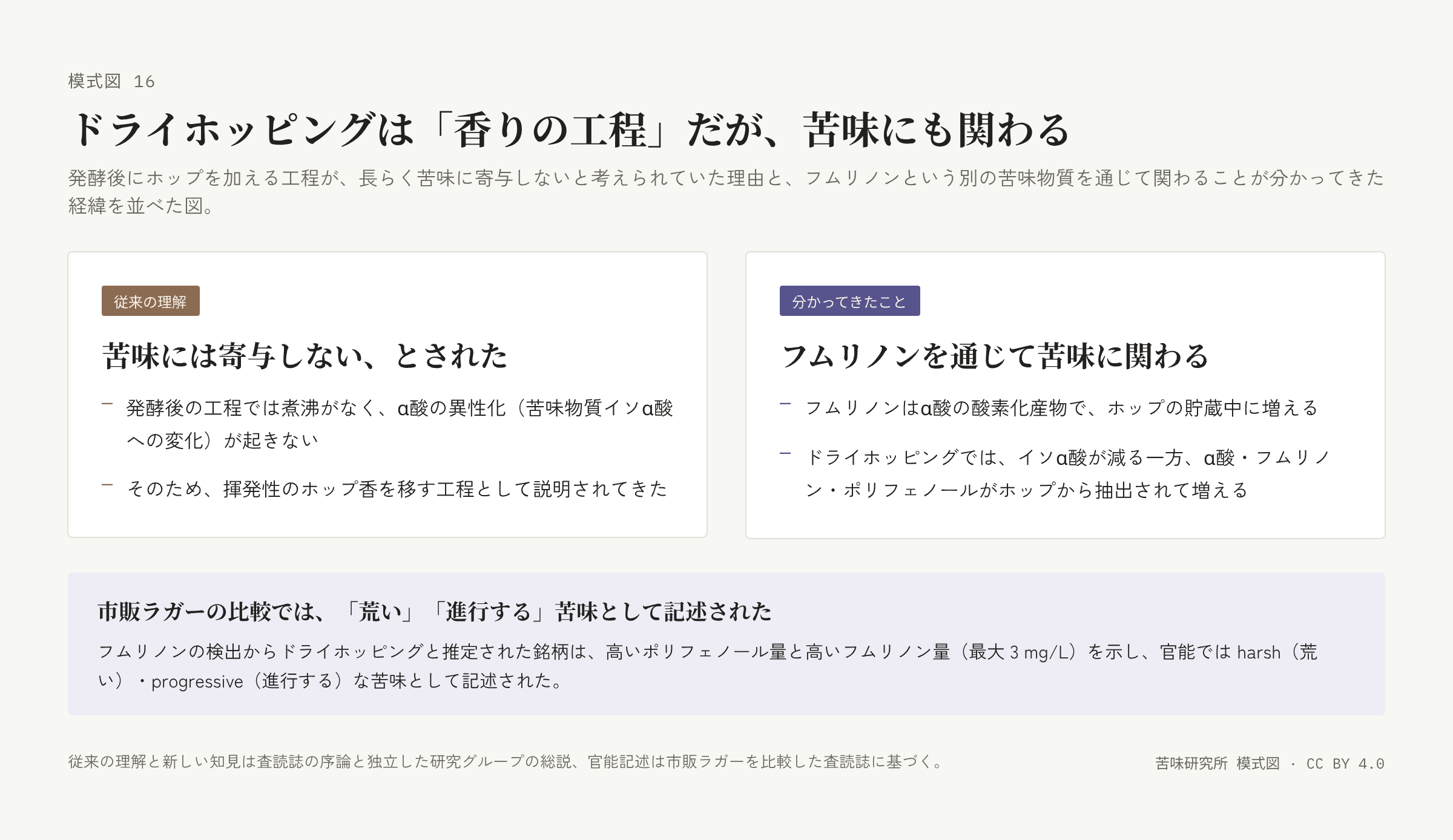
ドライホッピングは「香りの工程」だが、苦味にも関わる
発酵後にホップを加えるドライホッピングが、煮沸がなくα酸の異性化が起きないため長らく苦味に寄与しないとされてきた理解と、α酸の酸素化産物フムリノンを通じて苦味に関わることが分かってきた経緯を左右に並べ、市販ラガーの比較で「荒い」「進行する」苦味として記述された報告を帯に記した図。
根拠: ev-humulinone-dryhop-rutnik · ev-dry-hop-review-klimczak · ev-dry-hopping-aroma-role · ev-w35-dry-hopping-oladokun
加工・条件 / process-dry-hopping
↑苦味を読む
ドライホッピングは、麦汁を煮沸する段階ではなく、発酵を終えたあと、あるいは低温での熟成中のビールにホップを加える工程である。煮沸を伴わないため、α酸が苦味の主体であるイソα酸へ変化する異性化反応は起こらない。工程の説明としては、発酵後にホップの香りだけを移す作業として語られることが多いが、実際に調べてみると、ビールの苦味の化学組成も同時に動くことが分かっている。
ドライホップしたビールでは、苦味の目安として使われるIBU(国際苦味単位)の値が上がる一方、市販ビール15銘柄をドライホップの前後で調べた調査では、その過半数でむしろ総イソα酸濃度が下がっていた。無ホップのビールを0〜16グラム毎リットル・0〜72時間の条件でドライホップした実験では、このIBUの上昇はフムリノン(酸化したα酸)の抽出、場合によってはポリフェノールの抽出によるものとされた。別グループによる総説もこの二方向のずれを裏づけており、フムリノンの苦味の強さをイソα酸のおよそ66%(±13%)と見積もっている。
ドライホッピングは、α酸の異性化が起こらないためかつては苦味に寄与しないと考えられていた工程である。しかし、あるホップの鮮度を調べた研究では、ドライホップしたビールの苦味の主な源はフムリノンであり、フムリノンはドライホップ中に増えていくものの、ホップの貯蔵状態がある水準を超えるとさらに酸化が進んで減り始めると結論づけている。IBUの数値を、そのままイソα酸量の目安として読むことはできない。
発酵後にドライホップしたビールは、麦汁を煮沸しないぶんホップ由来の成分がそのまま移りやすく、香りは強く出る一方、ビール全体として感じられる苦味はケトルホッピングしたビールより弱いとされる。イソα酸への変化が進みにくい理由として、アルファ酸が水に溶けにくく多くが未溶解のまま残ることと、ドライホップ時の温度が熱による異性化を起こすには足りないことの二つが挙げられている。
米国の商業醸造で使われる動的(攪拌型)ドライホッピングでは、投入量の目安は500-800 g/hLとされ、これを超えるとホップ油で環境が飽和し、投入量あたりの抽出効率はかえって目立って下がるという。静置型のドライホッピングでは、13.3-15.0°C前後の工程温度下でおよそ24時間もあれば、フムリノンの平均75%が移行するとの報告もある。
具体的な数値例では、Cascadeホップを386.54 g/hL相当の投入量で3日間・16°Cでドライホップした一次研究で、イソα酸濃度が51 mg/Lから32 mg/Lへ下がる一方、フムリノンとアルファ酸はいずれも検出限界未満から13 mg/Lへ増えたと報告されている。別の実験でCascadeホップを1.43 g/Lでドライホップした場合、ポリフェノール濃度はドライホップ開始から2時間ほどで対照より有意に増えたが、時間の経過に対して一様には増えず、24時間ほどでいったん対照濃度を下回った後、最後の3日間で再び増加するという挙動が見られた。
この説明の根拠
Impact of Dry Hopping on Beer Flavor Stability
この本文で確認した範囲: 発酵後にホップ香を移す工程という説明と香りだけではない旨の確認/1.43 g/Lのドライホップでポリフェノールが2時間で有意増加後、24時間で一旦低下し最後の3日間で再増加するという挙動の根拠
Toward Understanding the Bitterness of Dry-Hopped Beer
この本文で確認した範囲: 投入率・接触時間の条件と市販15銘柄でのIBU上昇・イソα酸低下の確認/フムリノンがドライホップビールの苦味の潜在的な寄与体という記述
Effects of Dry-Hopping on Beer Chemistry and Sensory Properties - A Review
この本文で確認した範囲: 二方向のずれの文献収束とフムリノンの相対苦味66±13%の記述/米国の標準投入量500-800 g/hLと、超過時に抽出効率が下がる根拠/24時間・13.3-15.0°Cで平均75%のフムリノンが移行するという根拠/386.54 g/hL・3日間・16°Cでイソα酸51→32 mg/L、フムリノン・アルファ酸0→13 mg/Lという数値例の根拠
Impact of Hop Freshness on Dry Hopped Beer Quality
この本文で確認した範囲: かつて苦味に寄与しないとされていた経緯とフムリノンの増減の結論/ケトルホッピングと比べて香りが強く苦味は弱いという対比の根拠/異性化収率が低い理由(溶解度・温度)の根拠
構造化された主張 — 節を開くと、主張ごとの確度・根拠・限界が読めます
機構・受容体(1)
範囲: ホップ3品種(Celeia・Aurora・Styrian Wolf)・HSI5水準でドライホップしたビールについての考察
注記: 著者らは別文献の機構説明を採用しており、本研究独自の直接検証ではない。溶解度・温度それぞれの寄与を定量的に切り分けた実験ではない。
データを表示
process-dry-hopping —has_currently_proposed_mechanisms→ "イソα酸への異性化収率が低い理由として、アルファ酸の溶解度の低さと、熱異性化を起こすには温度が十分高くならないことの二点が提案されている"加工・調理でどう変わる(6)
範囲: 無ホップエールへのパイロット規模ドライホッピング(0-16 g/L、0-72 h)と、ドライホップ前後にサンプリングした太平洋岸北西部の市販ビール15銘柄の調査
注記: 2つの半面が逆方向に動く: 慣用の IBU 代用指標は上がるのに、それが代理するはずの化合物クラスは下がる。IBU をイソα酸の読み値として扱うことへの中心的な反証材料。
データを表示
process-dry-hopping —increases→ concept-bitterness-units範囲: パイロット規模研究、15銘柄の市販品調査、3品種のホップ鮮度試験におけるドライホップビール
データを表示
compound-humulinones —is_extracted_into_beer_by→ process-dry-hopping範囲: ドライホップ時間研究の工程定義
注記: 『香りだけ』とはしない。既存データではフムリノン、ポリフェノール、IBU、イソα酸も動きうる。
データを表示
process-dry-hopping —is_used_as→ "発酵後にホップ香を加える工程"範囲: ドライホッピングとケトルホッピングを対比する工程一般の文献記述(ホップ品種・投入量は限定しない)
データを表示
process-dry-hopping —differs_from→ process-boil-hopping範囲: Cascadeホップを8 oz/bbl(1.43 g/L)で0-96時間ドライホップしたペールエール(出来立てのYoungビールと30日常温貯蔵後のAgedビール)
データを表示
compound-polyphenols —is_extracted_into_beer_by→ process-dry-hopping範囲: 米国での商業醸造における動的(攪拌型)ドライホッピングの慣行についての総説の記述
注記: 米国の慣行に限定された記述で、2200 g/hLのような高投入量の例も存在すると著者らは付言しており、絶対的な上限ではない。
データを表示
process-dry-hopping —has_typical_dosage_range_of→ "米国での動的ドライホッピングの標準的な投入量は500-800 g/hLとされ、これを超えるとホップ油による環境の飽和により投入量あたりの抽出効率が目立って低下する"