加工・条件
カカオ焙炒
cocoa roasting
カカオ焙炒は、時間と温度で規定されるカカオ豆またはニブの加熱処理。
模式図 — 写真ではなく、根拠をもとに苦味研究所が組んだ説明図
根拠の数値を図にしたもの(苦味研究所作成)· CC BY 4.0
カカオ焙炒 — 温度を上げるほど、無糖チョコレートの苦味は下がった
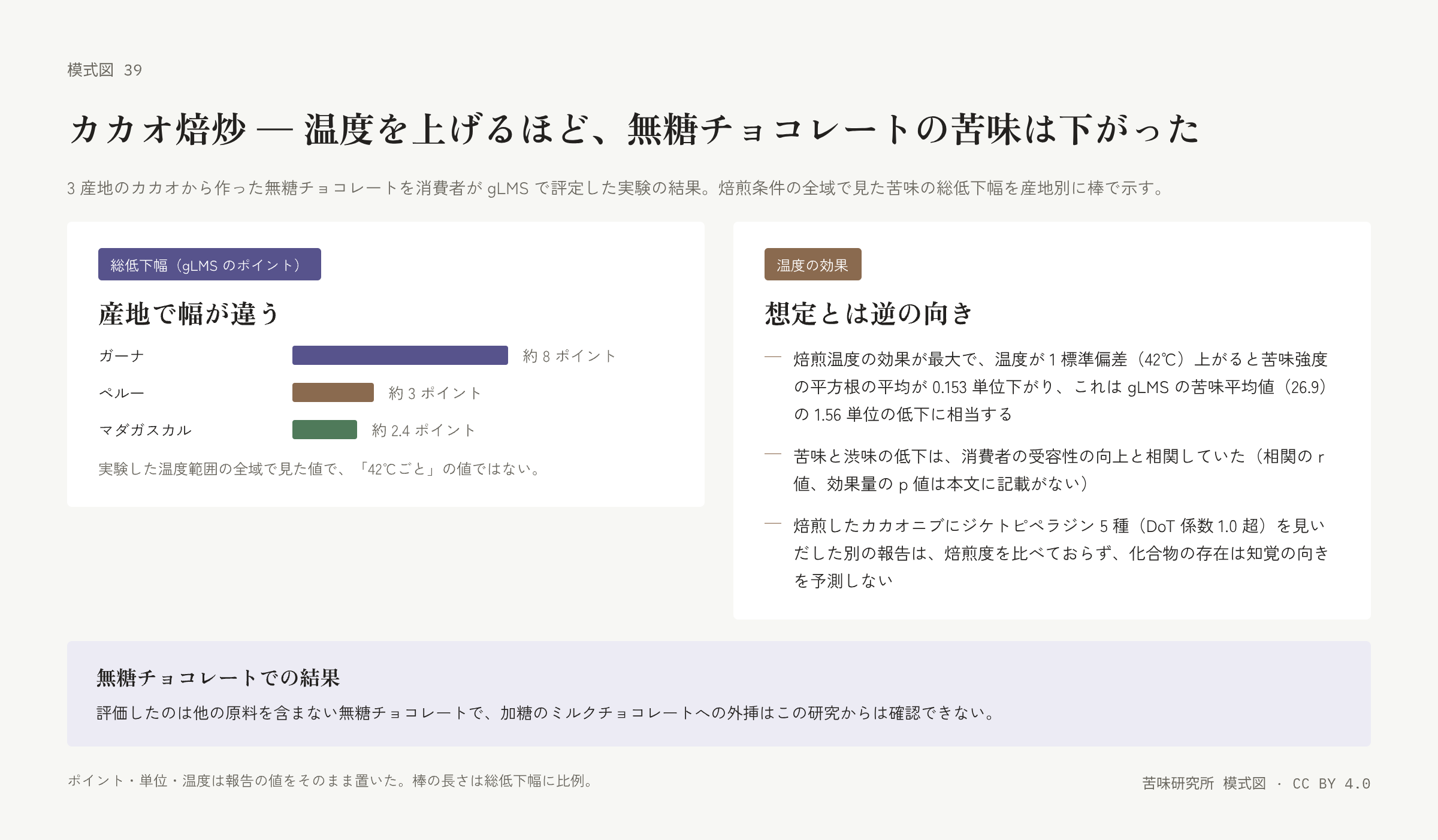
3 産地のカカオから作った無糖チョコレートを消費者が gLMS で評定した実験で、焙煎条件の全域で見た苦味の総低下幅(ガーナ約 8 ポイント、ペルー約 3 ポイント、マダガスカル約 2.4 ポイント)を棒で示し、焙煎温度が 1 標準偏差(42℃)上がると苦味が 1.56 単位(平均 26.9 に対して)下がること、苦味と渋味の低下が受容性の向上と相関したことを添えた図。無糖チョコレートの結果で、加糖のミルクチョコレートへの外挿は確認できない。
根拠: ev-mcclure-roast-bitterness · ev-w51-roasting-reduces-bitterness · ev-stark-dkp-roast-context
加工・条件 / process-cocoa-roasting
このページの内容(6 節)
苦味を読む
カカオ焙炒は、時間と温度で規定されるカカオ豆またはニブの加熱処理である。マダガスカル、ガーナ、ペルーの3産地の未焙煎カカオから作った100%チョコレートを用いた研究は、24℃・0分の生対照を含む27処理という計画的な焙煎実験を行い、18-65歳の消費者145名(男性38名)が9点嗜好尺度で好ましさを、gLMSで属性強度を評定した。
この研究では焙煎温度の効果が最大であり、焙煎温度が1標準偏差(すなわち42℃)上がると苦味強度の平方根の平均値が0.153単位低下し、これはgLMS上の苦味平均値(26.9)の1.56単位の低下に相当すると報告する。焙煎温度が高いほど苦味が強まるという想定とは逆の方向であり、苦味と渋味の低下は消費者受容性の向上と相関していたと報告する。ただしこの効果量にp値は、相関にr値は示されていない。
焙煎条件の全域で見た苦味の総低下幅は産地により異なり、ガーナで約8ポイント、マダガスカルで約2.4ポイント、ペルーで約3ポイントであったと報告する(これらは42℃ごとの値ではない)。対象は無糖チョコレートであり、加糖のミルクチョコレートへの外挿はこの研究からは確認できない。焙煎したカカオニブにジケトピペラジン5種(DoT係数1.0超)が含まれることを見いだした研究もあるが、この研究は焙煎度の比較を行っておらず、焙煎条件と知覚苦味の関係も報告していない。
この説明の根拠
この本文で確認した範囲: 焙煎実験の産地・処理条件・評価パネルの設計/焙煎温度上昇に伴う苦味低下量の具体的数値/産地別の苦味低下幅と無糖チョコレート限定の範囲
この本文で確認した範囲: 苦味関連化合物の存在が知覚方向を予測しない旨
構造化された主張 — 節を開くと、主張ごとの確度・根拠・限界が読めます
加工・調理でどう変わる(3)
範囲: 3産地にわたる27の焙煎処理、チョコレート消費者145名、gLMS
注記: 方向は「焙煎温度が高いほど苦くなる」という直観の逆。この効果量に p 値は掲載されていない。
データを表示
process-cocoa-roasting —reduces→ sensation-bitter範囲: 無糖(100%)チョコレート、カカオ産地3種(ガーナ・マダガスカル・ペルー)、消費者パネル145名によるgLMS官能評価
注記: ロースト温度が42℃上昇するごとにgLMSスケールで苦味が平均約1.56ユニット低下したと報告される。産地により低下幅は異なり、ガーナで約8ポイント、マダガスカルで約2.4ポイント、ペルーで約3ポイントの低下が報告されている。対象は無糖チョコレートであり、加糖ミルクチョコレートへの外挿は当該研究からは確認できない。
データを表示
process-cocoa-roasting —reduces→ sensation-bitter範囲: ICCOの工程表では乾燥と焙煎を別工程として記載。
データを表示
process-cocoa-bean-drying —differs_from→ process-cocoa-roasting